
Written & Reviewed by
Dr. Choe Jeongheon
General Surgeon · Orthopedic Clinic Director · MD, PhD
Founder of MADI-BONE CLINIC, Seoul. 10+ years of experience in musculoskeletal medicine and private orthopedic care.
Why Disc Degeneration Happens Earlier Than You Think
By MADI-BONE CLINIC | Gangnam (Seolleung Station)
Disc Degeneration Is a Natural Part of Aging
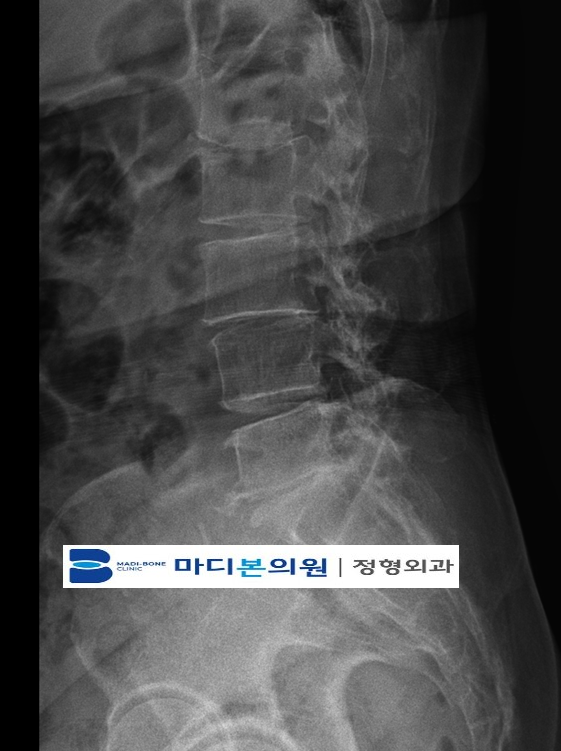
Cervical and lumbar discs undergo degenerative changes as we age.
While aging is unavoidable, several factors can accelerate the process:
- poor posture
- repetitive overuse
- previous injuries
- genetic influences
- diet and lifestyle
Because of this, some patients begin to show disc degeneration as early as their 20s and 30s.
Studies show that disc degeneration can appear in young adults, with prevalence increasing sharply with age.
Brinjikji et al., Spine MRI Meta-Analysis
What Happens When a Disc Begins to Degenerate?
When disc aging begins, the disc loses hydration and elasticity.
This leads to:
- reduced flexibility
- localized or radiating pain
- increased stress on surrounding muscles and ligaments
- a higher risk of injury
Degeneration in the disc also increases the likelihood of:
- annular tears
- disc bulging
- herniation
- facet joint overload
Disc degeneration can disrupt the biomechanics of the spine, contributing to muscle strain and ligament injury.
Adams & Roughley, Spine Biology Review
Once Damaged, Discs Are Difficult to Reverse
Unlike muscle or skin tissue, disc tissue has limited blood supply.
This means:
- healing is slow
- complete regeneration is unlikely
- the goal of treatment is to slow progression and control symptoms
This is why early management and lifestyle habits are essential once disc changes begin.
How We Manage Disc Degeneration Without Surgery
At MADI-BONE CLINIC, our focus is on non-surgical, conservative treatment to protect spinal health and prevent rapid progression.
1) Nerve Block Injections
Used to reduce inflammation around irritated nerves and provide pain relief.
2) Extracorporeal Shockwave Therapy (ESWT)
ESWT helps reduce chronic soft-tissue tension and stimulates healing in surrounding structures.
3) Manual Therapy & Exercise-Based Correction
- improving spinal alignment
- reducing muscle compensation patterns
- strengthening deep stabilizing muscles
4) Lifestyle & Posture Coaching
To prevent further wear and tear, we help patients understand posture habits and daily movement patterns.
Exercise-based therapy and conservative management remain first-line treatments for most degenerative disc conditions.
Zaina et al., Non-surgical Low Back Pain Review
Protect Your Spine Before Degeneration Progresses
Disc degeneration cannot be “reversed,” but it can be controlled.
With proper management:
- pain decreases
- mobility improves
- progression slows
- the need for surgery can often be avoided
Our goal is always to preserve spinal health with non-surgical options first.
MADI-BONE CLINIC (Seolleung Station, ~3 min on foot)
MADI-BONE CLINIC
3F, 428 Seolleung-ro, Gangnam-gu, Seoul
Seolleung Station (Line 2), Exit 1 — ~3 minutes on foot
02-736-2626
⏰ Mon–Fri 09:30–18:30 / Sat 09:30–13:00 (Closed Sundays & Public Holidays)
References
- Brinjikji W, et al. MRI findings of spine degeneration in asymptomatic adults. Spine. PubMed
- Adams MA, Roughley PJ. Biology of disc degeneration. Spine. PubMed
- Zaina F, et al. Non-surgical management of low back pain. PubMed
This article is for educational purposes and does not replace an individual medical evaluation or treatment plan.