
Written & Reviewed by
Dr. Choe Jeongheon
General Surgeon · Orthopedic Clinic Director · MD, PhD
Founder of MADI-BONE CLINIC, Seoul. 10+ years of experience in musculoskeletal medicine and private orthopedic care.
How Poor Posture Accelerates Disc Degeneration
By MADI-BONE CLINIC | Gangnam (Seolleung Station)
Bad Posture Isn’t Just a Habit — It Actively Damages Your Spinal Discs
Patients often ask:
“Can posture really cause disc problems?”
“Does looking down at my phone actually damage my neck?”
The answer is: Yes, posture plays a major role.
Not only does poor posture cause muscle fatigue and pain — it can also accelerate disc degeneration in both the cervical (neck) and lumbar (lower back) spine.
1. Forward Head Posture Greatly Increases Disc Pressure
Your head weighs about 4–6 kg.
When the head shifts forward even a little, the pressure on the cervical discs increases dramatically.
- 0 cm forward → ~5 kg load
- 2.5 cm forward → ~12 kg load
- 5 cm forward → ~18 kg load
- 7.5 cm forward → ~22 kg load
This chronic overload speeds up disc dehydration and structural wear.
Forward head posture increases mechanical stress on the cervical spine and accelerates disc degeneration.
Posture & Neck Pain Review (2020)
2. Sitting for Long Hours Decreases Disc Nutrition
Spinal discs receive nutrients primarily through movement.
When we sit for long periods:
- disc metabolism decreases
- internal disc pressure increases
- hydrostatic pressure causes disc bulging
- the outer ring (annulus) weakens
Prolonged sitting increases intradiscal pressure and contributes to lumbar disc degeneration.
Nachemson Disc Pressure Study
3. Poor Posture Creates Muscle Imbalance That Pulls on the Spine
When posture is poor:
- neck extensor muscles become overstretched
- deep stabilizer muscles weaken
- upper trapezius and levator scapula tighten
- pelvic position changes, altering lumbar curvature
This imbalance increases shear forces on the discs, making them more vulnerable to injury or herniation.
Muscle imbalance significantly increases disc stress and contributes to spinal degeneration.
Adams & Roughley, Spine Biology Review
4. “Tech Neck” Is Now Seen in People in Their 20s
Excessive smartphone and computer use has led to a rise in disc degeneration among young adults.
MRI studies have shown:
- disc bulging
- loss of cervical lordosis
- early degenerative changes
in patients in their **20s and 30s**, largely due to posture-related stress.
Disc degeneration is increasingly common in younger populations, strongly associated with lifestyle and posture.
Spine MRI Meta-Analysis (2015)
5. Once the Disc Begins Degenerating, It’s Hard to Reverse
Discs have very limited blood supply.
This means:
- healing is slow
- regeneration is limited
- prevention and early management are crucial
Once degeneration begins, the goal is to slow further damage, not reverse it completely.
How to Protect Your Discs From Posture-Related Damage
The goal is not perfect posture — it’s sustainable, low-stress posture habits.
✔ 1) Keep screens at eye level
✔ 2) Take movement breaks every 30–40 minutes
✔ 3) Strengthen deep neck flexors & core muscles
✔ 4) Avoid high pillows and forward head posture
✔ 5) Maintain a neutral pelvis while sitting
Even small adjustments, when done consistently, significantly reduce disc stress.
When to Visit a Clinic
- persistent neck or lower back pain
- repeated stiffness despite stretching
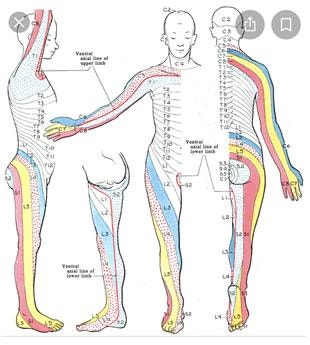
- radiating pain into the arms or legs
- headaches linked to posture
- tingling or numbness in hands or feet
Early intervention prevents chronic degeneration and reduces the likelihood of future disc herniation.
MADI-BONE CLINIC (Seolleung Station, ~3 min on foot)
MADI-BONE CLINIC
3F, 428 Seolleung-ro, Gangnam-gu, Seoul
Seolleung Station (Line 2), Exit 1 — ~3 minutes on foot
02-736-2626
⏰ Mon–Fri 09:30–18:30 / Sat 09:30–13:00 (Closed Sundays & Public Holidays)
References
- González-Sánchez et al. Posture and neck pain review. PubMed
- Nachemson A. Intradiscal pressure measurement study. PubMed
- Brinjikji W, et al. Spine MRI meta-analysis. PubMed
- Adams MA, Roughley PJ. Biology of disc degeneration. Spine. PubMed
This article is for educational purposes and does not replace an individual medical evaluation or treatment plan.