
Written & Reviewed by
Dr. Choe Jeongheon
General Surgeon · Orthopedic Clinic Director · MD, PhD
Founder of MADI-BONE CLINIC, Seoul. 10+ years of experience in musculoskeletal medicine and private orthopedic care.
Chronic ankle instability can cause secondary problems in the knees, hips, and lower back by altering alignment and load distribution. Learn how ankle weakness affects the entire lower body and how to prevent long-term damage. MADI-BONE CLINIC Seolleung.
How Chronic Ankle Instability Leads to Knee and Lower Back Pain
By MADI-BONE CLINIC | Gangnam (Seolleung Station)
One Weak Joint Can Affect the Entire Lower Body
Many patients are surprised to learn that a simple ankle injury can eventually cause knee pain, hip discomfort, or even lower back pain.
The reason is straightforward:
“The ankle is the foundation of the lower body.
If the foundation becomes unstable, everything above it must compensate.”
Chronic ankle instability changes movement patterns and increases the load on nearby joints, leading to secondary pain syndromes.
1. Why Ankle Instability Happens
Chronic ankle instability typically develops when:
- the ankle was sprained and not fully rehabilitated
- ligaments healed in a stretched or weakened state
- ankle muscles supporting the joint became deconditioned
- balance and proprioception were not restored after injury
Once instability sets in, the body begins to compensate — and compensation always leads to secondary problems.

2. How Ankle Instability Affects the Knee
When the ankle does not stabilize properly, the knee joint absorbs excessive rotational and side-to-side forces.
This commonly leads to:
- patellofemoral pain (front knee pain)
- iliotibial band tightness (outer knee discomfort)
- increased stress on the meniscus
- overcompensation during running or fast walking
Patients often say:
“My knee hurts every time I go down the stairs.”
“My knee pain started months after an ankle sprain.”
Research shows that altered foot and ankle mechanics increase knee joint load and may contribute to patellofemoral pain.
Kinematic Chain Study
3. How Ankle Instability Affects the Hip
When the ankle cannot stabilize the leg, the hip muscles — especially the gluteus medius — must work harder.
Over time, this leads to:
- hip tightness or deep aching
- gluteal muscle fatigue and weakness
- pelvic imbalance during walking or running
This can also trigger **piriformis-related pain**, causing buttock discomfort or radiating symptoms.
4. How Ankle Instability Affects the Lower Back
The effects continue upward.
Chronic ankle dysfunction disrupts the body’s natural shock absorption and forces the lower back to compensate for each step.
This often results in:
- lumbar muscle tension
- increased low back fatigue during walking
- worsened posture due to altered gait mechanics
- recurrent lower back pain after long walks or runs
Lower limb instability can alter trunk mechanics and increase lumbar stress.
Gait & Lumbar Load Study
5. Preventing Secondary Pain Through Ankle Stabilization
The best way to prevent knee, hip, and lower back problems from developing is to address the root cause — the ankle.
We usually recommend:
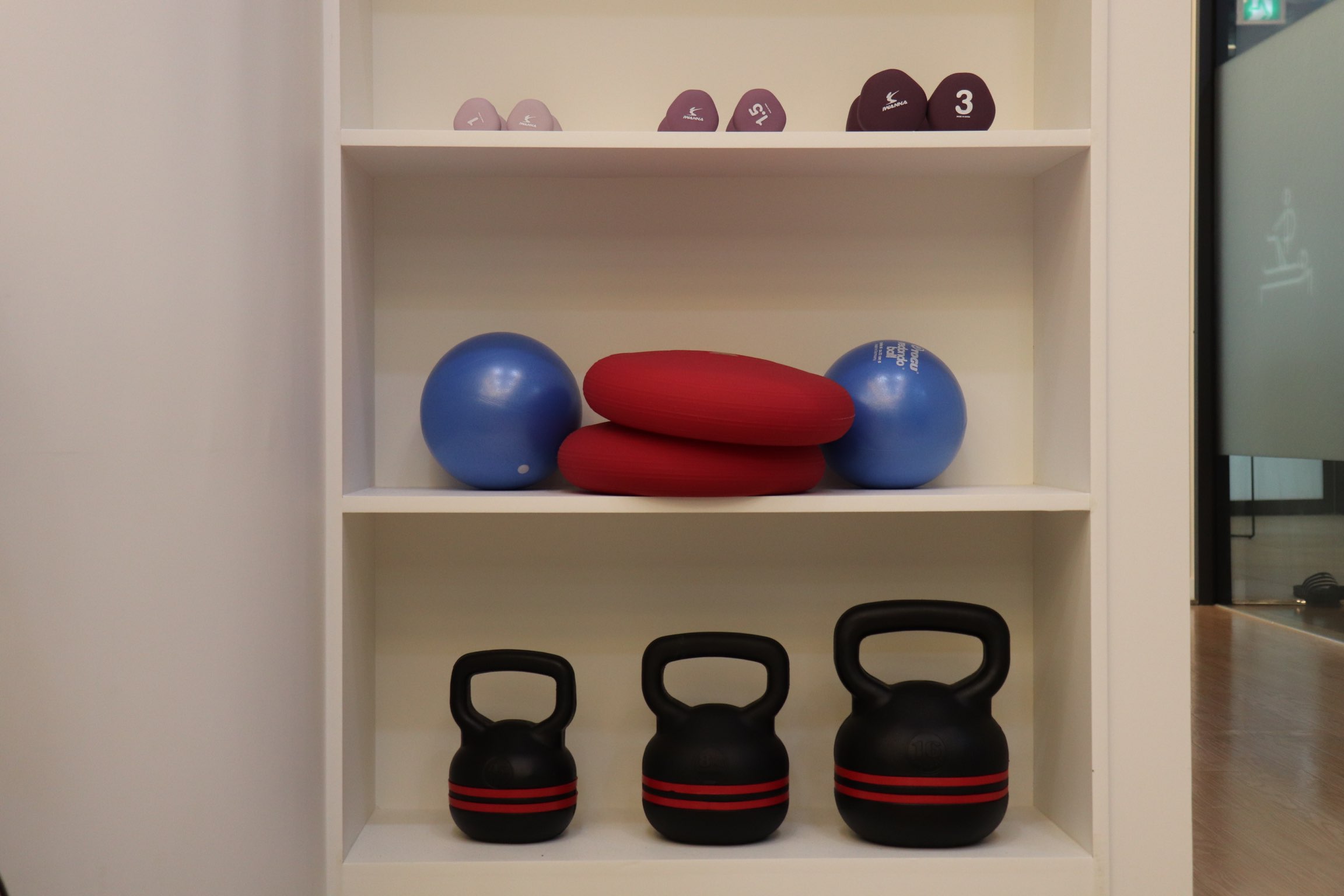
- 2–3 sessions of supervised exercise therapy to learn ankle strengthening
- balance and proprioception training to reduce instability
- functional drills for walking and running mechanics
- evaluation of footwear and running surfaces

When the ankle becomes strong and stable, secondary pain in the knees, hips, and lower back often improves naturally.
Related Posts
- Fast Walking, Running, and Ankle Instability
- Achilles Tendinopathy in Runners
- 7 Essential Stretches for Marathon Runners
Frequently Asked Questions (FAQ)
1. Can a mild ankle sprain really affect my knee or back?
Yes. Even a mild sprain can cause changes in walking mechanics, increasing stress on the knee and back.
2. How do I know if my ankle instability is causing other pain?
If knee, hip, or back pain developed after an ankle injury — or worsens with long walks — ankle instability may be the root cause.
3. Will ankle strengthening exercises fix secondary pain?
In many cases, yes. When the ankle stabilizes properly, stress on other joints decreases significantly.
MADI-BONE CLINIC (Seolleung Station, ~3 min on foot)
MADI-BONE CLINIC
3F, 428 Seolleung-ro, Gangnam-gu, Seoul
Seolleung Station (Line 2), Exit 1 — ~3 minutes on foot
02-736-2626
⏰ Mon–Fri 09:30–18:30 / Sat 09:30–13:00 (Closed Sundays & Public Holidays)