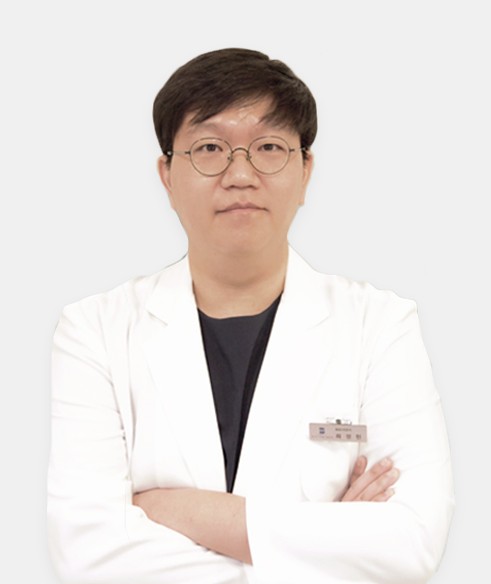
Written & Reviewed by
Dr. Choe Jeongheon
General Surgeon · Orthopedic Clinic Director · MD, PhD
Founder of MADI-BONE CLINIC, Seoul. 10+ years of experience in musculoskeletal medicine and private orthopedic care.
Not every teen with scoliosis needs aggressive treatment. Learn when to observe, when to act, and how decisions are made.
Teen Scoliosis: When Is Treatment Really Needed?
By MADI-BONE CLINIC — Seolleung, Gangnam
“Does My Teen Really Need Treatment for Scoliosis?”
After hearing that their teenager has scoliosis, many parents worry:
“Is treatment absolutely necessary?”
“Will it keep getting worse?”
“Do we need a brace or even surgery?”
The reality is more nuanced.
Not every teen with scoliosis needs aggressive treatment.
Some curves only require observation and exercise, while others do need bracing or, in rare cases, surgery.
The key question is not “Is there scoliosis?” but rather:
“How big is the curve, how fast is the child growing, and is it progressing?”
Three Main Factors That Guide Treatment Decisions
In adolescent scoliosis, treatment is based on a combination of:
- Cobb angle (curve size)
- Growth stage of the teen
- Curve progression over time
Other factors may include pain, cosmetic concerns, muscle imbalance and family history,
but the three elements above form the core of decision-making.
1. Cobb Angle — How Large Is the Curve?
The Cobb angle is the standard way to measure scoliosis on X-ray.
It describes how many degrees the spine is curved.
General guidance often follows these ranges (though details vary by individual):
- Under ~10° — Not usually classified as scoliosis, may be considered postural variation.
- 10–20° — Mild scoliosis. Often monitored with periodic follow-up.
- 20–40° — Moderate scoliosis. Risk of progression, especially during growth spurts.
- Over 40–45° — More significant curve. In some cases, surgical options are discussed.
But Cobb angle alone is not enough — it must be interpreted alongside growth stage.

2. Growth Stage — How Much Growing Is Left?
Scoliosis is most active during rapid growth.
A smaller curve in a child who is far from skeletal maturity can be more concerning than
a larger curve in a nearly fully grown teen.
Clues that growth is still ongoing:
- younger age at diagnosis
- recent growth spurts
- girls before or within 1–2 years of first menstruation
- boys still rapidly gaining height
Once growth stabilizes, scoliosis progression usually slows dramatically.
This is why early detection and appropriate timing of follow-up are so important.
3. Curve Progression — Is the Curve Changing?
A single X-ray is like a snapshot.
To make decisions, we need a short “movie” of the curve over time.
We pay close attention to:
- Has the Cobb angle increased since the last visit?
- How quickly did it change (degrees per year)?
- Does the teen report new asymmetry or visible change?
A small but rapidly progressing curve can be more worrisome than a larger but stable one.
When Is Observation Enough?
Many teens fall into a category where:
- the curve is mild (about 10–20°)
- there is little to no pain
- no rapid progression is seen
In such cases, we often choose:
- regular monitoring (periodic X-rays and exams)
- postural and core exercises
- education about sitting, studying and activity habits
The goal is to support healthy growth and ensure we do not miss any significant progression.
No aggressive intervention is necessary in many of these mild cases.
When Is Structured Exercise Recommended?
Exercise becomes especially important when:
- there is mild to moderate curvature
- muscle imbalance and fatigue are present
- the teen spends long hours sitting and studying
Exercise-based care can help:
- improve posture and trunk control
- reduce back fatigue during study and sports
- support spine health during growth
It does not “erase” the curve, but it increases the body’s ability to handle daily load.

When Is Bracing Considered?
Bracing is usually discussed when:
- the Cobb angle is in the moderate range (often ~25–40°)
- the teen is still growing
- there is clear evidence of progression
The goal of bracing is not to “make the spine perfectly straight.”
Instead, it aims to:
- slow or stop further progression
- help avoid surgery in high-risk curves
Bracing decisions are individualized and often coordinated with a spine specialist team.
At MADI-BONE CLINIC, we focus on:
- early detection
- timely referral when brace thresholds are met
- exercise and manual therapy support alongside bracing when appropriate
When Is Surgery Discussed?
Surgery is reserved for a small minority of scoliosis cases,
typically when:
- the curve exceeds a significant threshold (often over 40–45° and progressing)
- there is risk to lung function or severe deformity
- pain or function are seriously impacted
Most teens with scoliosis never require surgery.
The idea of surgery can be frightening for families,
so careful explanation and referral to a spine surgery specialist are essential in those situations.
What About Pain in Teen Scoliosis?
Interestingly, many teens with scoliosis have:
- minimal or no pain
- some muscle fatigue rather than sharp pain
Pain alone does not determine scoliosis severity.
Mild curves may still cause discomfort after long sitting, while some larger curves cause little pain.
We consider pain as part of the whole picture — not the only factor.
Teen Scoliosis and Long Study Hours
As discussed in our previous article on sitting and disc pressure,
teens in Korea often sit for very long periods.
This environment can:
- increase spinal disc pressure
- fatigue postural muscles
- worsen visible asymmetry
We encourage:
- regular movement breaks during study
- simple spine-friendly exercises at home
- a balanced schedule that includes physical activity
These steps are beneficial regardless of whether a brace or other treatment is needed.
How We Approach Teen Scoliosis at MADI-BONE CLINIC
When a teenager visits our clinic with suspected or confirmed scoliosis, we:
- review growth history and family background
- assess posture, gait and muscle balance
- evaluate X-rays and measure the Cobb angle when needed
- discuss growth stage and risk of progression
Then we clearly explain:
- whether observation alone is appropriate
- whether exercise or manual therapy is recommended
- whether a brace consultation should be considered
- whether specialist surgical consultation is necessary (in advanced cases)
Our aim is to help families make informed, calm decisions —
not based on fear, but on clear understanding of the spine’s condition.
Related Articles on Spine Health
- Early Signs of Teen Scoliosis
- Why Sitting Increases Disc & Scoliosis Risk
- Why Pain Lasts Even Without a Fracture
Frequently Asked Questions (FAQ)
1. My teen has mild scoliosis. Do we need treatment right away?
Not necessarily. Many mild curves can be monitored with regular follow-up and supported with exercise.
The need for treatment depends on curve size, growth stage and progression.
2. Will my teen’s scoliosis get worse as an adult?
Most progression occurs during the growth years.
After growth is complete, many curves remain relatively stable.
However, monitoring and healthy spine habits are still important.
3. Should my teen stop sports if they have scoliosis?
In most cases, no.
Sports and physical activity are generally encouraged, with some adjustments if necessary.
Activity often helps muscle balance and overall health.
MADI-BONE CLINIC — Seolleung Station
MADI-BONE CLINIC
3F, 428 Seolleung-ro, Gangnam-gu, Seoul
Seolleung Station (Line 2), Exit 1 — ~3 minutes on foot
📞 02-736-2626
⏰ Mon–Fri 09:30–18:30 / Sat 09:30–13:00 (Closed Sundays & Public Holidays)