
Written & Reviewed by
Dr. Choe Jeongheon
General Surgeon · Orthopedic Clinic Director · MD, PhD
Founder of MADI-BONE CLINIC, Seoul. 10+ years of experience in musculoskeletal medicine and private orthopedic care.
Foot and ankle pain after long walks may signal Achilles tendon overload. Learn causes, treatment, and prevention.
Foot and Ankle Pain After Long Walks
By MADI-BONE CLINIC — Seolleung Station, Gangnam
When Walking Alone Becomes a Strain
Walking is generally considered one of the safest and healthiest forms of exercise.
However, in clinical practice, we frequently meet patients who experience
persistent foot or ankle pain after long walks — even without a clear injury.
Many patients say,
“I didn’t twist my ankle,” or “Nothing happened, but my foot started hurting.”
This type of pain should not be dismissed as simple fatigue.
In many cases, it reflects accumulated mechanical stress
on the foot–ankle complex.
Why Foot Pain Often Involves the Ankle
Although symptoms may begin in the sole of the foot,
the underlying issue is often related to the ankle.
The foot and ankle function as a single kinetic unit,
sharing load during standing and walking.
Among the structures involved,
the Achilles tendon plays a central role.
The Role of the Achilles Tendon
The Achilles tendon connects the calf muscles to the heel bone.
It is essential for:
- propelling the body forward
- absorbing impact during gait
- maintaining balance during stance
Because it is used continuously,
the Achilles tendon is particularly vulnerable to overuse.
Repeated walking without adequate recovery
can lead to inflammation or micro-damage.
Symptoms That Suggest Achilles Overload
Patients with Achilles tendon irritation often report:
- pain at the back of the heel
- combined ankle and heel discomfort
- stiffness during the first steps in the morning
- worsening pain after prolonged walking
Notably, these symptoms may appear even without a single traumatic event.
Why Ignoring the Pain Can Lead to Chronic Problems
A common misconception is that pain without injury
will resolve on its own.
However, continued loading on an irritated tendon
can lead to:
- chronic tendinopathy
- reduced ankle flexibility
- persistent heel pain
- limitations in daily activity
Early evaluation and appropriate management
are key to preventing long-term issues.
Shockwave Therapy as a Conservative Treatment Option
When Achilles tendon inflammation or overuse injury is identified,
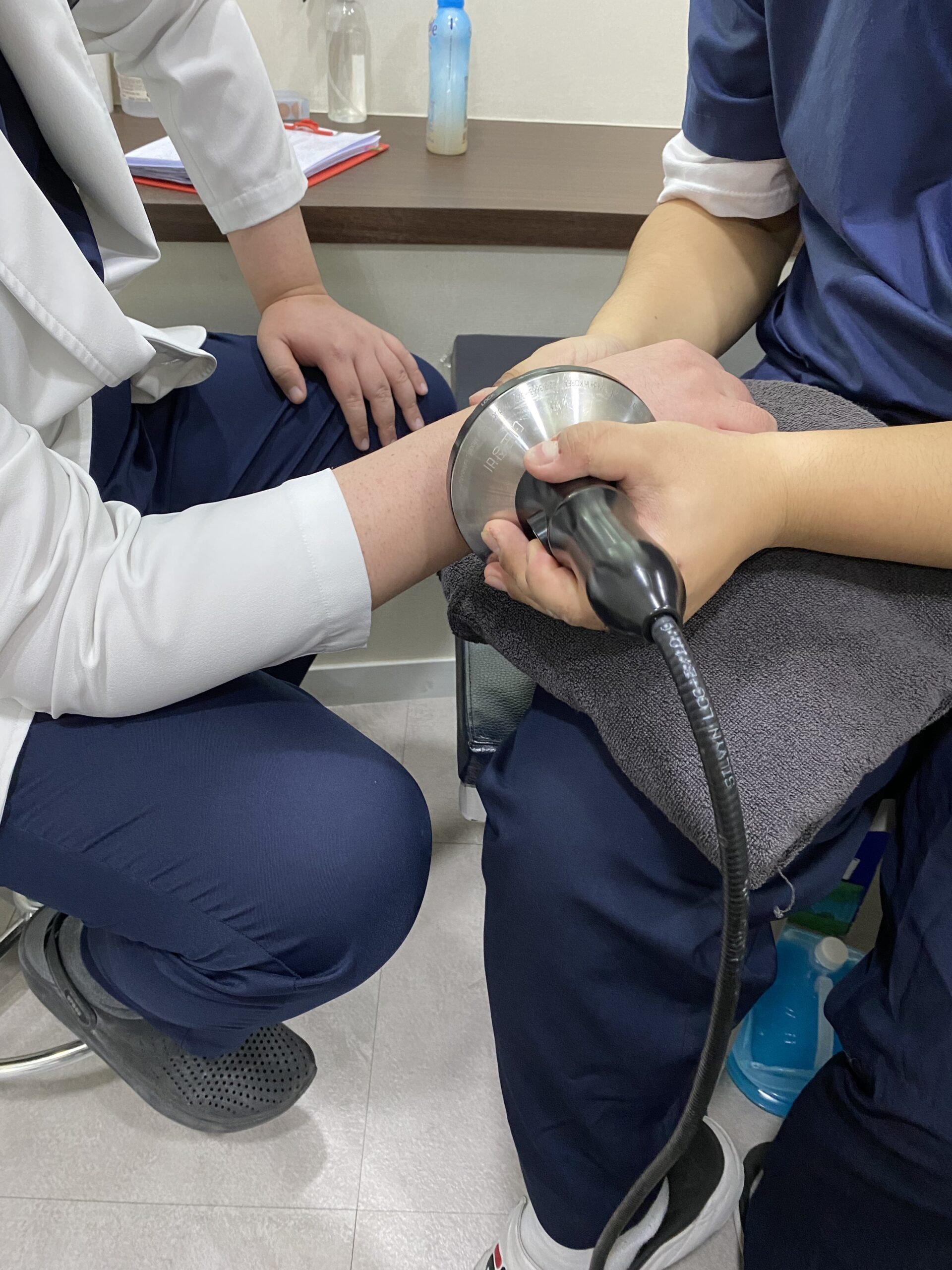
extracorporeal shockwave therapy (ESWT)
is often considered.
Shockwave therapy works by:
- reducing inflammatory responses
- improving local blood circulation
- stimulating tissue regeneration
Because it does not rely on medication,
it is suitable for patients who need
a sustainable, repeatable treatment approach.
Why Shockwave Therapy Fits Active Lifestyles
Many patients cannot significantly reduce walking
due to work or daily routines.
Shockwave therapy allows continued activity
while supporting the healing process,
making it particularly useful for:
- people who walk frequently
- travelers
- outdoor-oriented individuals
The goal is not only pain relief,
but restoring tissue resilience.
The Importance of Daily Stretching
Clinical treatment is most effective
when combined with daily self-care.
One simple preventive measure is regular Achilles stretching.
Gently pulling the toes toward the body
helps reduce tendon tension and improve flexibility.
Short, frequent stretching sessions
are more beneficial than occasional intense stretching.
A Note for Highly Active Personalities
Individuals who enjoy outdoor activities,
long walks, or travel often place repeated stress
on their feet and ankles.
For these active personalities,
foot health maintenance is essential.
Ignoring early symptoms can quickly limit mobility
and affect overall quality of life.
Related Articles
-
How to Treat Plantar Fasciitis: Early, Developing, and Chronic Stages Explained
-
Stay Fit & Healthy: Why Pelvic Balance Matters
-
Why Pelvic Balance Matters in Running and Golf
Frequently Asked Questions (FAQ)
1. Is foot pain after walking always serious?
Not always, but persistent or worsening pain
should be evaluated to rule out overuse injury.
2. Can Achilles problems occur without sports?
Yes. Repeated walking alone can overload the Achilles tendon,
especially without proper recovery.
3. When should I seek medical evaluation?
If pain lasts more than a few days,
recurs frequently, or affects daily activity,
professional evaluation is recommended.
MADI-BONE CLINIC — Seolleung Station
MADI-BONE CLINIC
3F, 428 Seolleung-ro, Gangnam-gu, Seoul
Seolleung Station (Line 2) Exit 1 — 3 minutes on foot
📞 02-736-2626
⏰ Mon–Fri 09:30–18:30 / Sat 09:30–13:00