
Written & Reviewed by
Dr. Choe Jeongheon
General Surgeon · Orthopedic Clinic Director · MD, PhD
Founder of MADI-BONE CLINIC, Seoul. 10+ years of experience in musculoskeletal medicine and private orthopedic care.
Wearing the wrong shoes can cause foot pain even without injury. Learn how shoe choice affects foot and ankle health.
Why Shoe Choice Matters for Foot Pain
By MADI-BONE CLINIC — Seolleung Station, Gangnam
Foot Pain Often Starts with What You Wear
Many patients are surprised to learn that foot pain does not always begin with
an injury or excessive exercise.
In clinical practice, we frequently see individuals whose symptoms are closely
linked to their footwear.
Even people who walk moderate distances can develop foot or ankle pain
if their shoes do not provide appropriate support.
Shoe choice is one of the most underestimated factors
in long-term foot and ankle health.
How Shoes Influence Foot Mechanics
Every step places force on the foot.
Shoes determine how that force is absorbed, distributed, and transferred.
Poorly designed or worn-out shoes may:
- increase stress on the heel and forefoot
- alter ankle movement patterns
- reduce shock absorption
- force the foot into unnatural positions
Over time, these changes can lead to pain
even without a specific traumatic event.
Common Shoe-Related Causes of Foot Pain
1. Insufficient Cushioning
Shoes with minimal cushioning fail to absorb impact,
placing greater load on the heel and plantar fascia.
This is a common contributor to heel pain after walking.
2. Poor Arch Support
Inadequate arch support can strain both the plantar fascia
and the Achilles tendon.
This is especially problematic for individuals who walk frequently.
3. Excessively Rigid Soles
Shoes that are too stiff restrict natural foot motion,
forcing compensation at the ankle and calf.
This may lead to tendon irritation over time.
4. Worn-Out Shoes
Shoes lose their supportive function gradually.
Patients often continue wearing shoes long after
their shock-absorbing capacity has deteriorated.
The Link Between Shoes and Achilles Tendon Pain
Footwear plays a direct role in Achilles tendon loading.
Shoes with poor heel support or excessive drop differences
can increase tension on the tendon.
This is one reason why Achilles pain may develop
even in individuals who are not runners or athletes.
You may also want to read:
Why Shoe Problems Are Often Overlooked
Foot pain develops gradually.
Because shoes are worn daily, the body adapts slowly,
making it difficult to identify footwear as the cause.
Many patients focus on:
- exercise habits
- body weight
- age-related changes
while overlooking a simple but critical factor:
their shoes.
Choosing Shoes That Protect Your Feet
While there is no single “perfect” shoe,
certain principles apply to most people:
- adequate cushioning without excessive softness
- stable heel counter
- moderate flexibility at the forefoot
- appropriate arch support
Shoes should support natural movement,
not force the foot into rigid patterns.
When Shoes Alone Are Not Enough
Footwear changes can reduce stress,
but they may not fully resolve pain once inflammation develops.
In cases of persistent foot or Achilles pain,
additional treatment may be required,
such as:
- activity modification
- stretching and mobility exercises
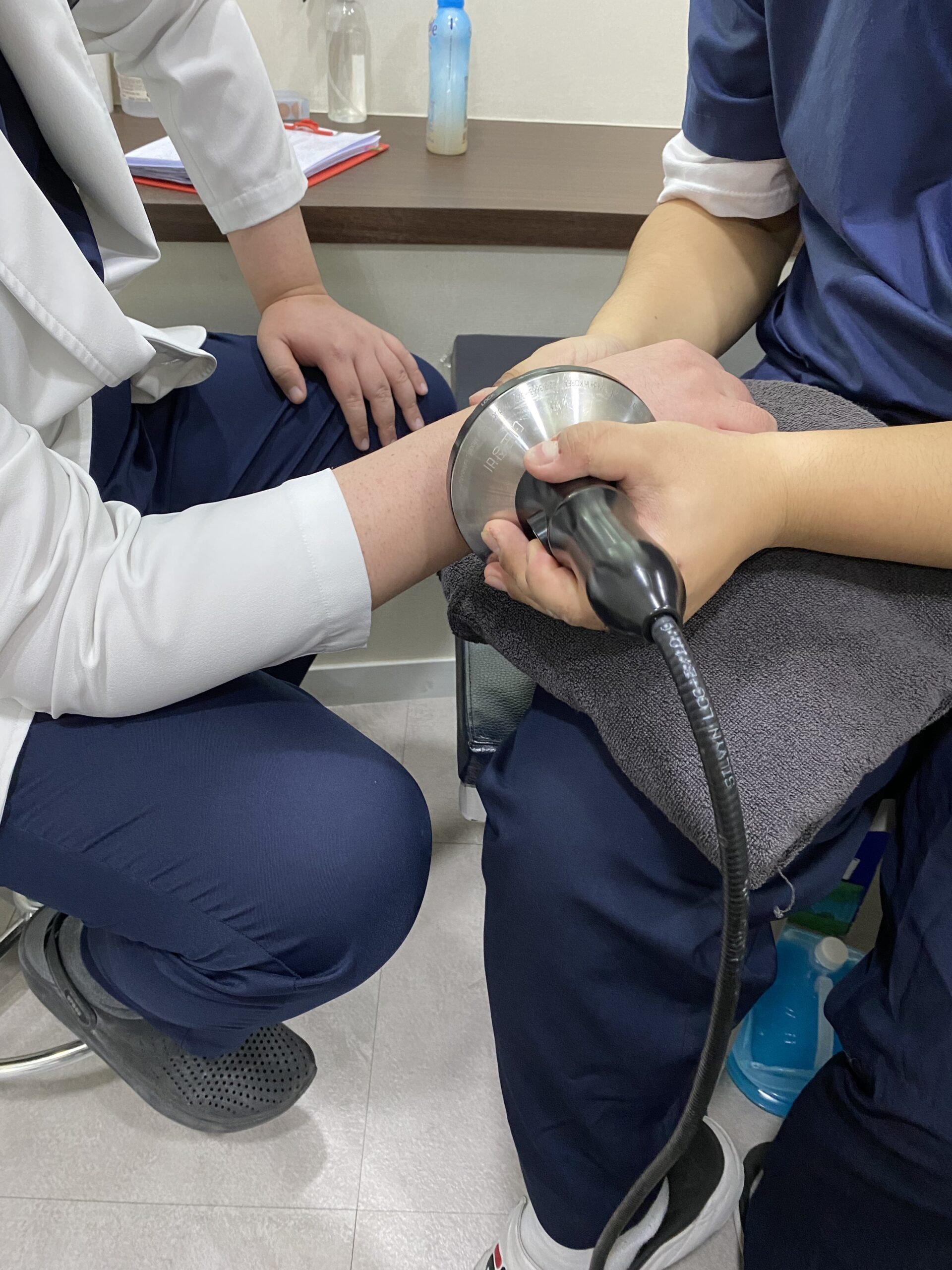
- shockwave therapy to support tissue recovery
Early intervention leads to better outcomes.
Foot Pain as a Signal, Not a Weakness
Foot pain is not a sign of fragility.
It is often a signal that load exceeds tolerance.
Addressing footwear early
can prevent progression to chronic conditions
that limit daily life.
Related Articles
-
Plantar Fasciitis vs Achilles Tendinitis
-
Foot and Ankle Pain After Long Walks
-
Stay Fit & Healthy: Why Pelvic Balance Matters
Frequently Asked Questions (FAQ)
1. How often should shoes be replaced?
For regular walkers, shoes typically lose support after several months,
even if they appear visually intact.
2. Can changing shoes alone resolve foot pain?
Early symptoms may improve,
but established inflammation often requires additional treatment.
3. Should I avoid walking if my shoes cause pain?
Reducing load temporarily and correcting footwear
is preferable to pushing through pain.
MADI-BONE CLINIC — Seolleung Station
MADI-BONE CLINIC
3F, 428 Seolleung-ro, Gangnam-gu, Seoul
Seolleung Station (Line 2) Exit 1 — 3 minutes on foot
📞 02-736-2626
⏰ Mon–Fri 09:30–18:30 / Sat 09:30–13:00