
Written & Reviewed by
Dr. Choe Jeongheon
General Surgeon · Orthopedic Clinic Director · MD, PhD
Founder of MADI-BONE CLINIC, Seoul. 10+ years of experience in musculoskeletal medicine and private orthopedic care.
Manual therapy can improve posture and spinal balance. A clinical example of reverse cervical curve correction.
Reverse Curve Correction Case
MADI-BONE CLINIC — Seolleung Station Orthopedic Clinic
Manual therapy is sometimes discussed mainly in terms of controversy,
but in clinical practice it can play an important role
when structural imbalance is the primary cause of pain.
One example is the correction of abnormal cervical spine alignment,
such as a straightened neck or a reverse cervical curve.
A Typical Patient Scenario
A patient visited the clinic complaining of persistent neck pain
and severe shoulder tension.
The symptoms had gradually worsened over several months,
especially during prolonged desk work.
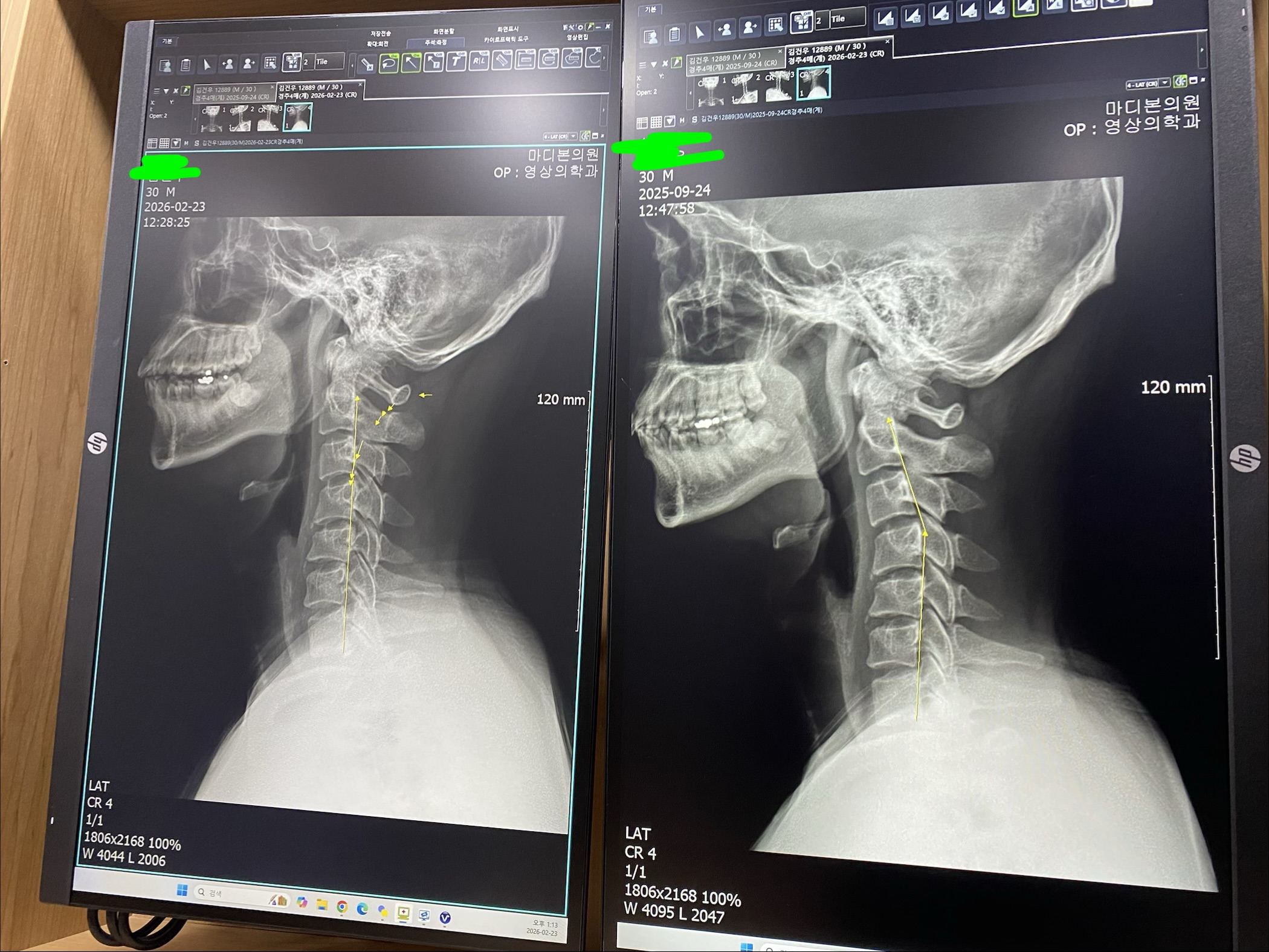
X-ray evaluation revealed a straightened cervical spine
approaching a reverse cervical curve.
This finding suggested that the natural curvature of the neck
had been altered over time due to posture and muscle imbalance.
Why the Pain Continued to Return
When cervical alignment changes,
the muscles surrounding the neck and shoulders
must constantly compensate.
- persistent trapezius tightness
- limited neck mobility
- frequent tension headaches
- fatigue during desk work
Although short-term treatments provided temporary relief,
the symptoms repeatedly returned.
Treatment Approach
Because the underlying issue appeared structural,
treatment focused on restoring normal mobility
and reducing muscular imbalance.
- manual therapy to release tight cervical muscles
- joint mobilization to improve segmental movement
- postural education
- strengthening exercises for deep cervical stabilizing muscles
This combined approach addressed both the symptoms
and the underlying mechanical imbalance.
Gradual Improvement Over Time
Structural changes rarely correct instantly.
With consistent therapy and exercise,
the patient gradually reported improvements in:
- neck mobility
- muscle tension
- daily comfort during desk work
Follow-up imaging demonstrated improvement in cervical alignment,
suggesting that postural correction had begun to occur.
Frequently Asked Questions
Can a reverse cervical curve improve?
In many patients, symptoms and alignment may improve with appropriate treatment and exercise.
How long does posture correction usually take?
Improvement typically occurs gradually over several weeks depending on the severity of the imbalance.
Is manual therapy enough on its own?
Long-term correction usually requires exercise and postural habit modification in addition to therapy.