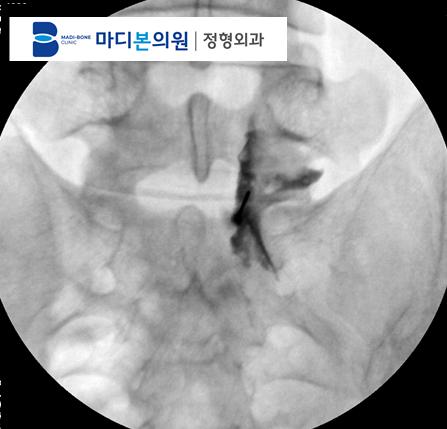
Do You Really Need Disc Surgery? How to Tell If Non-Surgical Care Is Enough
By MADI-BONE CLINIC | Gangnam (Seolleung Station)
Not All Disc Problems Are the Same
Many patients hear the word “disc” and immediately worry about surgery.
But in reality, most disc conditions recover without surgery, especially when managed early.
This article explains the difference between:
- Disc conditions that improve with conservative treatment
- Disc conditions that may require surgery
- Red flags that should never be ignored
1. Most Disc Herniations Improve Without Surgery
Research consistently shows that the majority of cervical and lumbar disc herniations improve with:
- nerve block injections
- physical therapy
- shockwave therapy
- activity modification
Up to 90% of disc herniation cases improve with non-surgical care within weeks to months.
Review: Non-Surgical Outcomes of Disc Herniation
This is why we often say:
“The presence of a herniated disc on MRI does not automatically mean surgery.”
2. When Is Non-Surgical Care Usually Enough?
You can expect good improvement without surgery if:
- pain is the main symptom (without significant weakness)
- tingling comes and goes
- pain improves with rest and treatment
- you can walk, stand, and sit without sharp functional loss
- MRI shows a bulging or protrusion rather than severe extrusion
In these cases, the goal is to:
- reduce inflammation
- calm irritated nerves
- improve spinal alignment and muscle balance
- prevent progression of degeneration
3. When Does Surgery Become a Consideration?
Surgery is not about pain alone — it is about function and nerve safety.
You should consider surgery when:
- there is progressive muscle weakness
- you cannot lift your foot (foot drop)
- you are losing grip strength or arm function
- severe nerve compression continues despite treatment
- pain is unbearable and does not improve with proper conservative care
Progressive neurological deficits are one of the strongest indicators for surgical intervention.
Lumbar Disc Surgery Indications
4. Red Flags: When Surgery or Immediate Evaluation Is Urgent
These symptoms require urgent assessment:
- loss of bowel or bladder control
- severe numbness in the saddle area
- rapidly worsening weakness in the legs or arms
- fever with back pain (infection concern)
- history of cancer with new back pain
Loss of bladder/bowel function and saddle anesthesia suggest possible cauda equina syndrome — a surgical emergency.
Cauda Equina Syndrome Review
5. What We Recommend at MADI-BONE CLINIC
Our philosophy is simple:
“Use surgery only when it is truly needed — and prevent it when possible.”
We focus on:
- nerve block injections for pain control
- shockwave therapy for surrounding tissue healing
- manual therapy to restore alignment and mobility
- exercise-based correction for long-term stability
With proper diagnosis and early treatment, most patients avoid surgery entirely.
6. MRI Is a Tool — Not a Decision Maker
Many patients feel anxious after seeing their MRI results.
But remember:
- a “bad-looking” MRI can still mean mild symptoms
- a normal MRI does not always mean no pain
- treatment decisions must be based on symptoms + function + exam, not the MRI alone
MRI findings often correlate poorly with pain levels.
MRI-Pain Correlation Study
So — Do You Need Surgery or Not?
Here is a simple rule of thumb:
- Pain only → usually non-surgical
- Weakness or function loss → evaluate for surgery
- Bowel/bladder symptoms → emergency
If you are unsure, that’s exactly what the consultation is for.
A careful exam can quickly determine the safest and most effective treatment path.
MADI-BONE CLINIC (Seolleung Station, ~3 min on foot)
MADI-BONE CLINIC
3F, 428 Seolleung-ro, Gangnam-gu, Seoul
Seolleung Station (Line 2), Exit 1 — ~3 minutes on foot
02-736-2626
⏰ Mon–Fri 09:30–18:30 / Sat 09:30–13:00 (Closed Sundays & Public Holidays)
References
- Weinstein JN, et al. Non-surgical vs surgical outcomes of disc herniation. PubMed
- Atlas SJ, et al. Indications for lumbar disc surgery. PubMed
- Gardner A, et al. Cauda equina syndrome review. PubMed
- Brinjikji W, et al. MRI degeneration findings in asymptomatic adults. PubMed
This article is for educational purposes and does not replace an individual medical evaluation or treatment plan.