Overuse hand and wrist pain is common among art-track teens. Learn safe, sustainable treatment options during exam preparation.
Hand and Wrist Pain in Art-Track Teens
By MADI-BONE CLINIC — Seolleung Station, Gangnam
Why Teen Patients from Daechi-dong Stand Out
When we see teenage patients coming from the Daechi-dong academy district,
it is hard not to feel a sense of concern.
At such a young age, many of them are already pushing their bodies
as hard as adults—preparing not only for academic exams,
but also for competitive tracks such as fine art, music, and dance.
This intensity often comes with a cost: overuse-related pain,
especially in the hands and wrists.
Art Students and Repetitive Hand Use
Among these teenagers, art-track students are particularly vulnerable.
Outside of regular school hours, most of their time is devoted to
drawing, sketching, and practicing technique.
Holding pencils, brushes, or sculpting tools for long hours
places repetitive stress on the fingers and wrists.
Over time, this can lead to:
- aching or throbbing wrist pain
- sharp sensations with finger movement
- temporary relief after rest, followed by pain on reuse
These symptoms often indicate cumulative micro-injury
to tendons and ligaments rather than simple fatigue.
Rest and Protection Are the First Priority
The most important initial step in treatment is reducing load.
Whenever possible, the affected hand or wrist should be allowed to rest.
We often recommend:
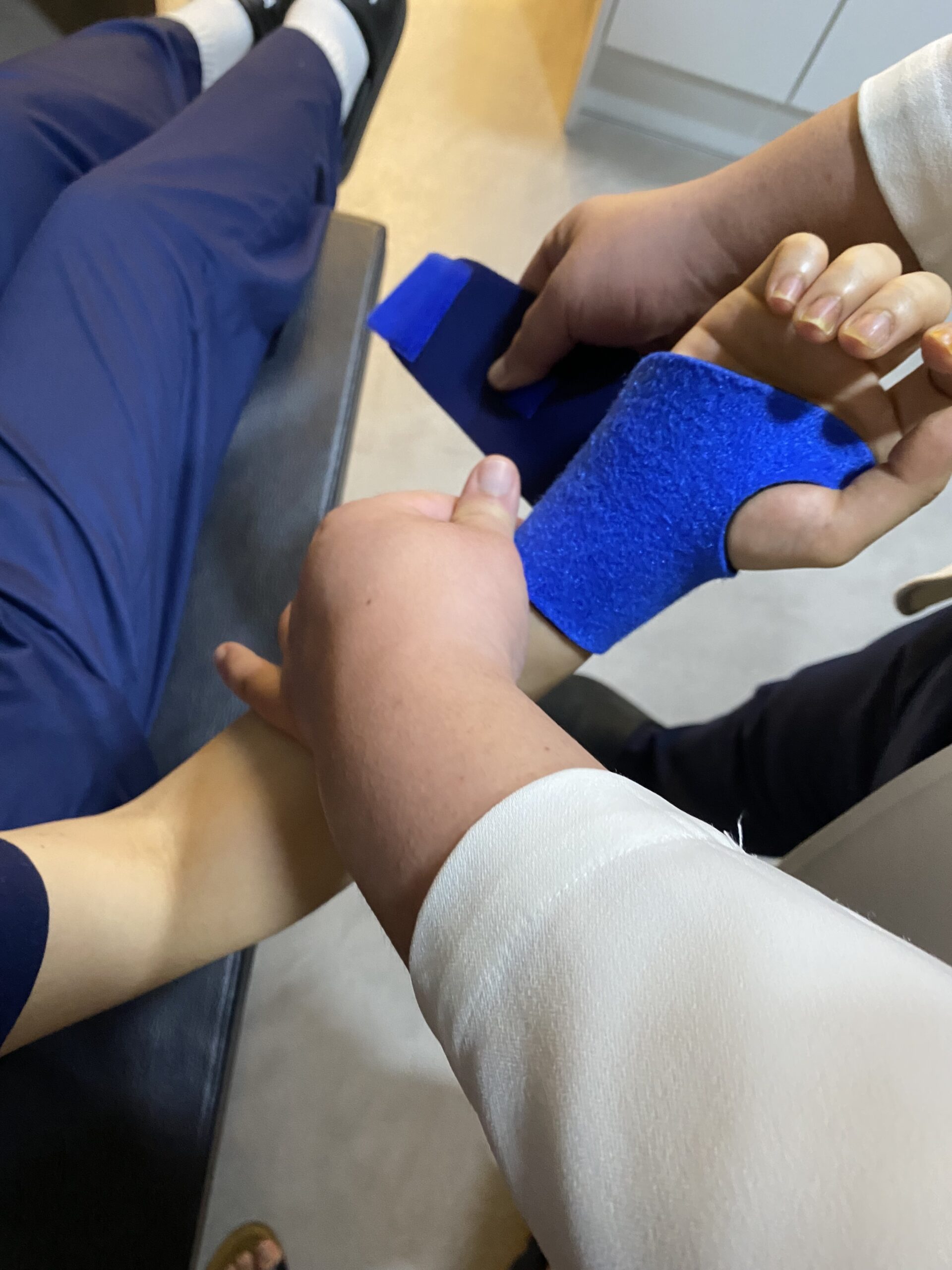
- short-term use of a soft splint or brace
- partial immobilization when not practicing
This helps prevent further damage while allowing daily life to continue.
However, for students preparing for entrance exams,
complete rest is rarely realistic.
The Need for Sustainable, Long-Term Care
Because stopping practice entirely is often not an option,
treatment must be both safe and sustainable.
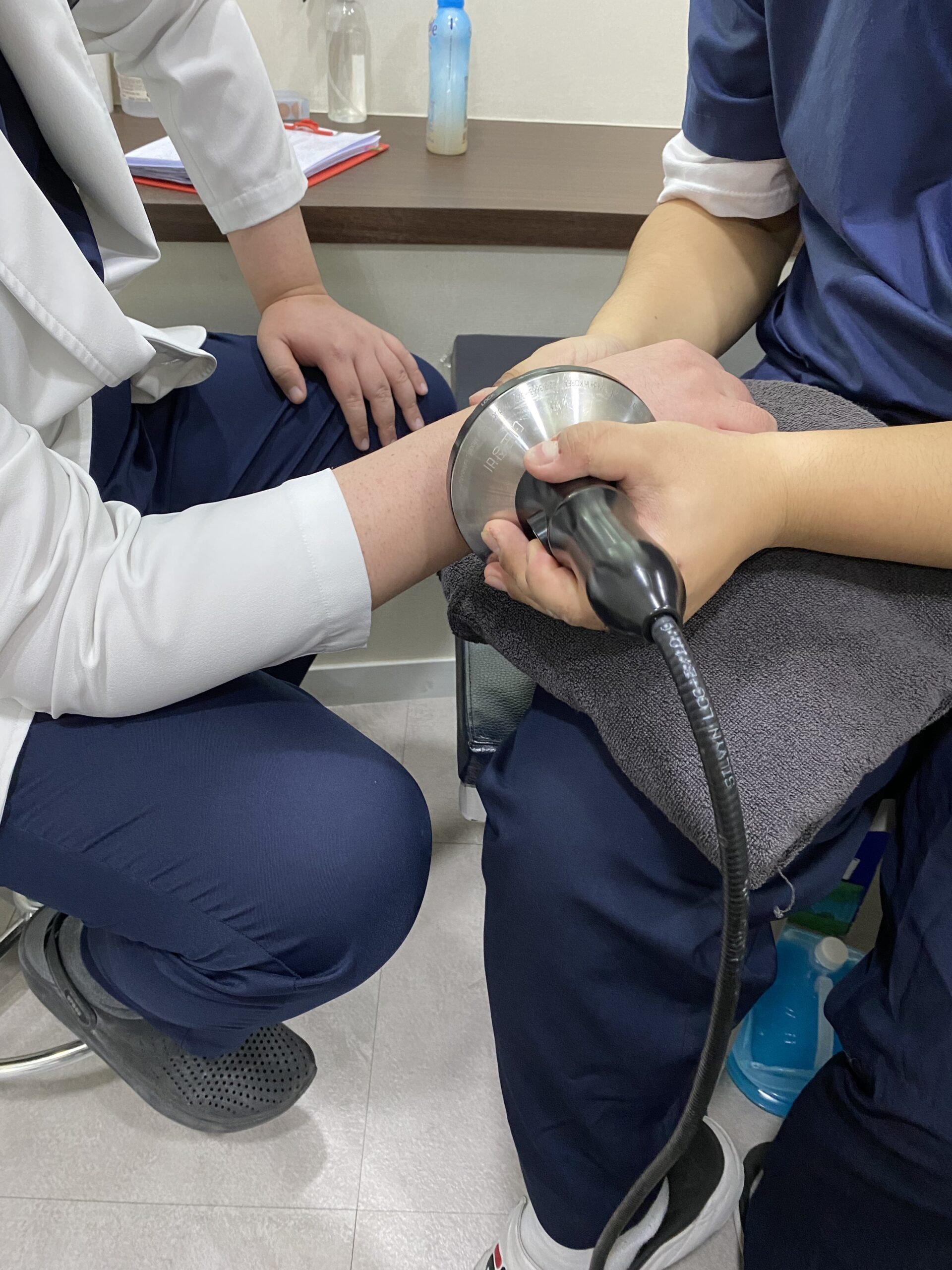
One effective approach is extracorporeal shockwave therapy (ESWT).
This method:
- does not rely on medication
- has a low risk of side effects
- can be applied repeatedly over time
Most importantly, shockwave therapy promotes tendon and ligament regeneration,
making it a valuable option during long preparation periods.
Why Shockwave Therapy Is Different
Unlike treatments that focus only on short-term pain relief,
shockwave therapy works by creating an environment
that encourages tissue recovery.
For young patients, this is especially important:
- it supports long-term healing
- it reduces reliance on medication
- it allows continued practice with proper management
This makes it a practical option for students
who need to protect their bodies while continuing their training.
Technique Matters More Than the Machine
One important point parents and students often overlook is that
the effectiveness of shockwave therapy depends less on the device itself
and more on the clinician’s technique.
Accurate treatment requires:
- precise identification of weakened tendons or ligaments
- correct targeting of the pain source
- appropriate depth and intensity control
When applied correctly, the therapy can significantly reduce pain
and improve function.
Supporting Students Through the Exam Period
Pain during adolescence should never be dismissed as something
that will “just go away.”
Untreated overuse injuries can follow students into adulthood
as chronic problems.
Our goal is not only pain control,
but helping students maintain their physical condition
so they can focus on their exams without unnecessary setbacks.
Regular check-ups and early intervention
can make a meaningful difference.
Related Articles
-
Why Pelvic Balance Matters in Running and Golf
-
Stay Fit & Healthy: Why Pelvic Balance Matters
-
Beauty Check: How to Pinpoint a Neck Hump from Side Photos
Frequently Asked Questions (FAQ)
1. Is wrist pain in teenagers always temporary?
No. Repeated overuse can lead to tendon and ligament damage
that may persist if not properly managed.
2. Is shockwave therapy safe for adolescents?
When applied appropriately, shockwave therapy is considered safe
and is often used to support tendon recovery without medication.
3. Should students stop practicing completely?
Complete rest is not always necessary.
With proper protection, treatment, and monitoring,
many students can continue practicing safely.
MADI-BONE CLINIC — Seolleung Station
MADI-BONE CLINIC
3F, 428 Seolleung-ro, Gangnam-gu, Seoul
Seolleung Station (Line 2) Exit 1 — 3 minutes on foot
📞 02-736-2626
⏰ Mon–Fri 09:30–18:30 / Sat 09:30–13:00