How to Prevent Plantar Fasciitis in Daily Life
By MADI-BONE CLINIC | Gangnam (Seolleung Station)
Plantar Fasciitis Rarely Starts in One Day
Many people think plantar fasciitis “suddenly” appears one morning.
In reality, plantar heel pain is usually the result of small, repeated overloads to the plantar fascia over weeks or months.
The good news: there are several simple daily habits that can reduce your risk before the pain becomes severe.
1. Choose Shoes That Help Your Feet, Not Hurt Them
Footwear is one of the most powerful tools for prevention. In daily life, try to:
- Use shoes with good cushioning under the heel and midfoot.
- Avoid very thin soles or hard, flat shoes for long walks.
- Limit time in high heels or unsupportive slippers.
- Consider arch-supporting insoles if you have flat feet or very high arches.
Studies suggest that supportive footwear and orthoses can redistribute plantar pressure and reduce symptoms in people at risk for plantar heel pain.
Footwear & pressure review
2. Respect Your Activity Load (Especially After a Break)
A common story is:
“After a long break, I suddenly started walking or running much more,
and a few days later my heel started to hurt.”
Your plantar fascia needs time to adapt. To protect it:
- Increase walking or running volume by about 10–20% per week, not all at once.
- After holidays or a long rest period, restart gradually, not with a “marathon weekend.”
- Mix in lower-impact activities (cycling, swimming, elliptical) if your heels feel tired.
Sudden spikes in load are a known risk factor for overuse injuries in the lower limb, including plantar heel pain and tendinopathy.
Gabbett, Br J Sports Med 2016
3. Use a Simple Stretching Routine for the Plantar Fascia and Calf
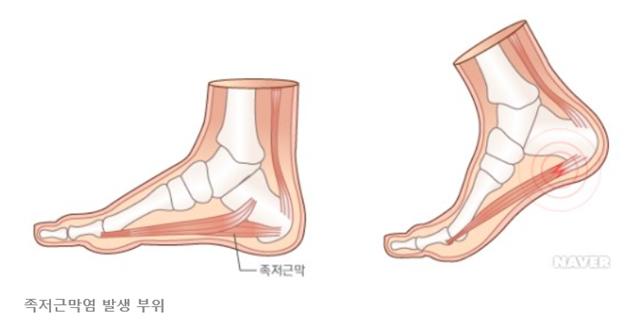
Tight calf muscles and a stiff plantar fascia can increase stress on the heel.
A simple routine you can do at home:
(1) Calf Stretch Against a Wall
- Place both hands on a wall, one leg behind.
- Keep the back heel on the floor and knee straight.
- Lean forward until you feel a stretch in the calf.
- Hold for 30 seconds, repeat 2–3 times on each side.
(2) Plantar Fascia Stretch in Sitting
- Sit and cross one leg over the other.
- Hold the base of your toes and gently pull them back toward your shin.
- You should feel a stretch along the arch of the foot.
- Hold for 20–30 seconds, repeat 2–3 times.
Heel and plantar fascia stretching programs have been shown to improve symptoms of plantar fasciitis and are commonly recommended as part of conservative management.
Plantar fascia stretching trial
4. Don’t Ignore Morning “First-Step” Pain
One classic early sign of plantar fasciitis is:
- sharp or pulling pain in the heel or arch with the first steps in the morning
- pain when standing up after sitting for a long time
At this stage, the condition is often still reversible with simple measures:
- reducing long walks for a short period
- switching to better cushioned shoes
- starting the stretching routine above
If you continue to push through the pain for weeks or months, the plantar fascia can become more irritated and harder to calm down.
5. Be Careful with Standing Jobs and Hard Floors
People who work long hours standing on hard surfaces (factory floors, retail, kitchens, hospitals) often have higher plantar stress.
If possible:
- Use anti-fatigue mats where you stand most.
- Invest in good quality, supportive work shoes.
- Change footwear once they are worn down, especially at the heel.
Epidemiological studies link long-standing occupations and hard surfaces with increased risk of plantar heel pain and other foot complaints.
Occupational foot pain study
6. Watch Your Weight and Overall Recovery
Extra body weight increases the load on the plantar fascia with every step.
Sleep, general fitness, and recovery also affect how well tissues handle stress.
- If you are trying to lose weight, consider low-impact exercises first to protect the heel.
- Pay attention to overall recovery: sleep, rest days, and stress management.
When Prevention Is Not Enough
Despite good habits, some people still develop plantar fasciitis. You should consider a clinic visit if:
- heel or arch pain lasts more than 2–3 weeks despite modifying activity
- pain interferes with walking, work, or exercise
- one foot becomes very swollen, red, or warm
- you are unsure whether the pain is from plantar fasciitis or something else (stress fracture, nerve problem, etc.)
At that point, a structured treatment plan—stretching, load management, manual therapy, orthoses, and in some cases shockwave therapy (ESWT)—may be needed.
ESWT review for plantar heel pain
MADI-BONE CLINIC (Seolleung Station, ~3 min on foot)
MADI-BONE CLINIC
3F, 428 Seolleung-ro, Gangnam-gu, Seoul
Seolleung Station (Line 2), Exit 1 — ~3 minutes on foot
02-736-2626
⏰ Mon–Fri 09:30–18:30 / Sat 09:30–13:00 (Closed Sundays & Public Holidays)
References (for interested readers)
- Radford JA, et al. Effectiveness of calf and plantar fascia stretching for plantar heel pain. BMJ / RCT. PubMed
- Bus SA, et al. Footwear and insole design for pressure redistribution. PubMed
- Thomson CE, et al. Extracorporeal shockwave therapy for plantar heel pain (systematic review). PubMed
- Gabbett TJ. The training–injury prevention paradox. Br J Sports Med. Link
- Occupational standing & foot pain: work-related foot complaints study
This article is for educational purposes and does not replace an individual medical evaluation or treatment plan.