

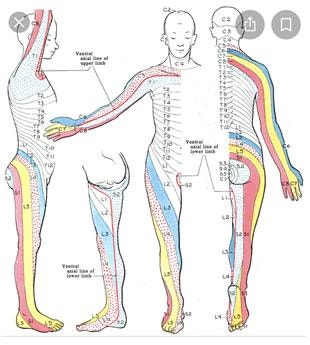
“I didn’t overdo anything… but my left leg keeps cramping and my foot feels strange.”
A recent patient told us exactly this: there was no recent strain or trauma, yet she had frequent muscle cramps in the left leg and felt that a part of her sole was unfamiliar, almost “not my own foot.” After listening to the full story, the pattern pointed to the lower back as the likely origin.
Why a Lower Back Problem Can Show Up as Leg Symptoms
Nerves exiting the lumbar spine travel down into the leg, foot and toes. When a nerve is compressed—by a disc herniation, spinal stenosis, thickened ligaments or hypertrophic facet joints—patients may notice:
- Cramping or involuntary muscle tightening in the leg
- Numbness or altered sensation in part of the foot
- Tingling or burning following a dermatomal (nerve) pattern
In other words, symptoms that feel like a leg problem can actually originate from the spine.
Treat the Root Cause—So the Leg Improves
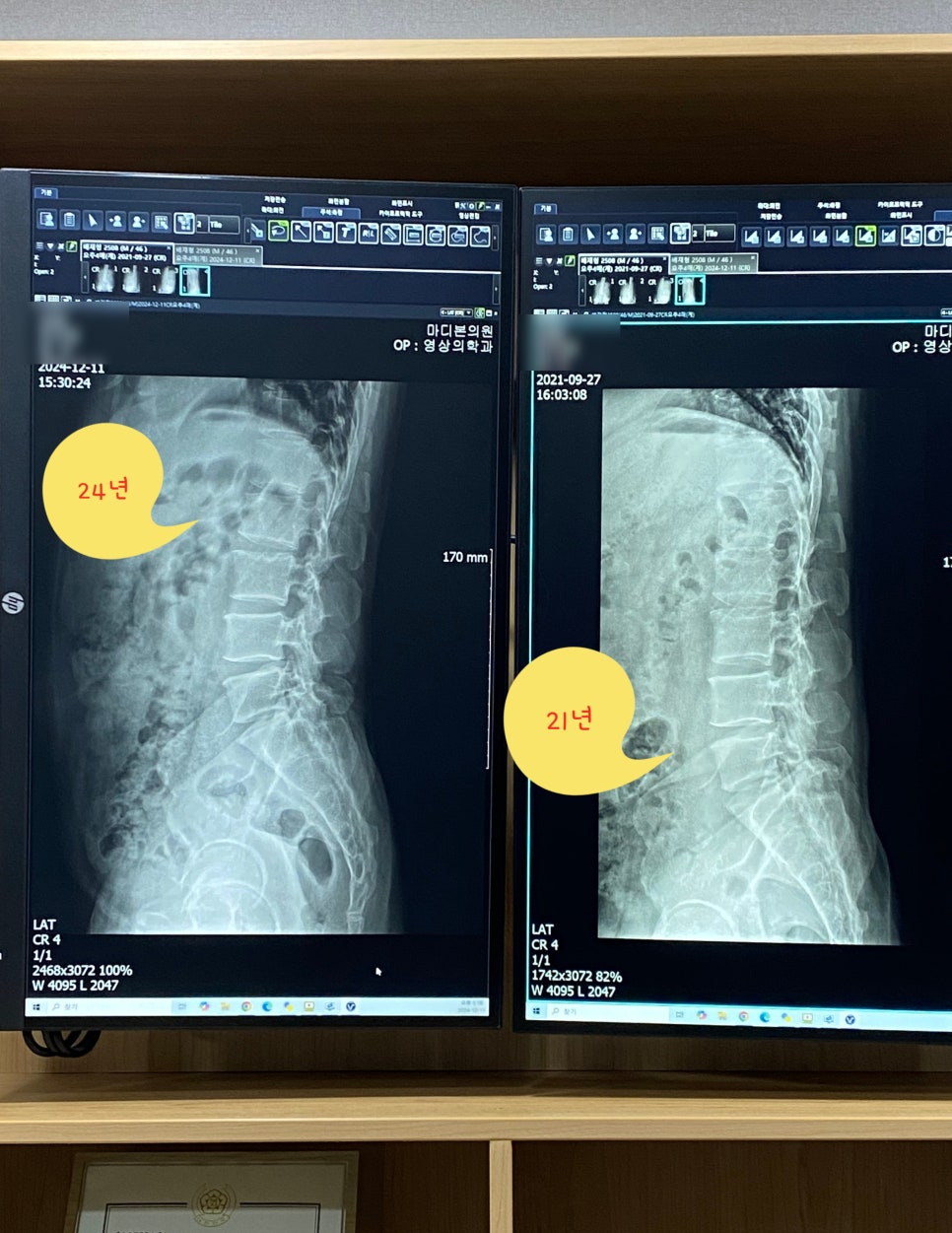
At MADI-BONE CLINIC, we combine X-ray, ultrasound and C-arm fluoroscopy to localise the compressed nerve at its exit or within the spinal canal. With targeted epidural or selective nerve-root injections we aim to:
- Reduce inflammation and swelling around the affected nerve
- Create more space in the narrowed canal/foramen
- Relieve leg cramps, numbness and tingling more effectively than “leg-only” care
Many initially-skeptical patients respond quickly and often say, “I can’t believe my leg symptoms improved after a back treatment!”
Pain and Cramps Are Signals—Don’t Ignore Them
Persistent, unexplained cramps or numbness should never be dismissed. Untreated nerve compression can lead to chronic changes and prolonged neurological impairment. Early diagnosis and targeted treatment generally produce better outcomes.
MADI-BONE CLINIC (Seolleung Station, Gangnam)
We provide minimally invasive, same-day treatments and tailored rehabilitation to help you return to normal activities quickly and safely.
Don’t wait until things get worse. Early diagnosis + targeted treatment = better outcomes.
Suggested References
- Sung MS, et al. Epidural Steroid Injection for Lumbosacral Radiculopathy.
Korean Journal of Radiology (2006). - Zhang J, et al. Efficacy of epidural steroid injection in the treatment of sciatica caused by lumbar disc herniation.
Frontiers in Neurology (2024). - Iversen T, et al. Effect of caudal epidural steroid or saline injection in chronic lumbar radiculopathy.
BMJ (2011). - Hasvik E, et al. Symptom descriptors and patterns in lumbar radicular pain: a cross-sectional study.
BMJ Open (2022).
Thanks for your blog post. I would also love to say that your health insurance brokerage service also utilizes the benefit of the coordinators of any group insurance cover. The health insurance broker is given a directory of benefits needed by someone or a group coordinator. Exactly what a broker really does is find individuals and also coordinators which best complement those needs. Then he offers his ideas and if all parties agree, the broker formulates binding agreement between the two parties.
Thank you for your comment. In Korea, you can get efficient medical care at a low cost. If you visit Korea, make sure to experience various medical services. Even if you don’t have Korean insurance, the cost is very reasonable, and medical personnel are professional.
Thank you for another informative blog. Where else could I get that type of info written in such a perfect way? I have a project that I’m just now working on, and I’ve been on the look out for such information.
In Korea, the medical market is very competitive, so personal clinics also use blogs about patients and diseases. I think it would be good to use it.