Disc degeneration cannot be reversed, but it can be managed. Learn how to protect your spine without surgery.
Managing Disc Degeneration Without Surgery
By MADI-BONE CLINIC — Seolleung Station, Gangnam
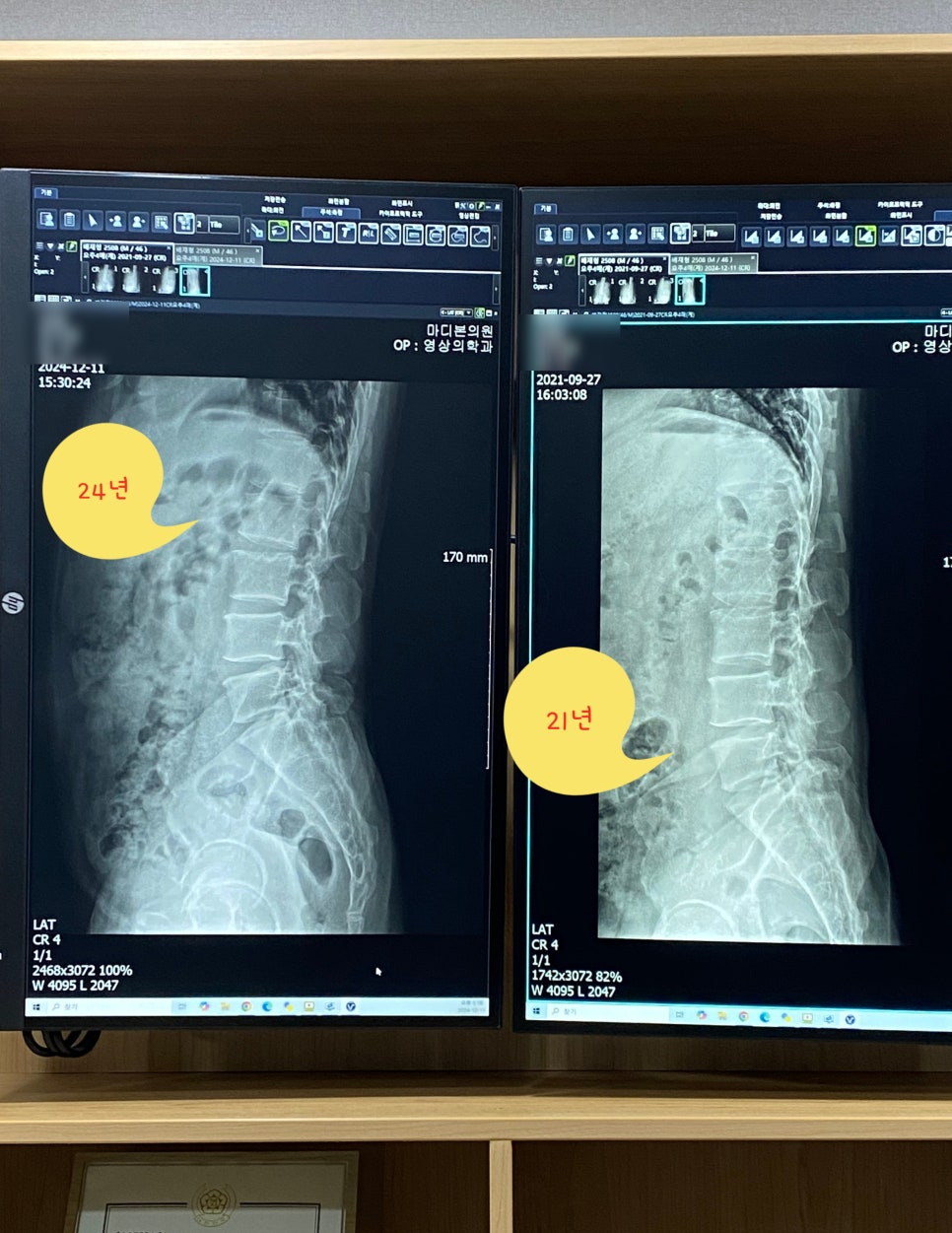
Disc Degeneration Is Managed, Not Reversed
Spinal discs naturally undergo degenerative changes over time.
Once structural damage has occurred,
returning the disc to its original state is difficult.
For this reason, modern spine care focuses not on reversal,
but on slowing progression and preserving function.
Early and appropriate management can significantly reduce symptoms
and improve long-term outcomes.
Why Surgery Is Not Always Necessary
Many patients assume that disc degeneration
inevitably leads to surgery.
In reality, most cases can be managed conservatively,
especially when neurological deficits are absent.
The goal is to relieve pain,
restore stability,
and prevent further deterioration.
Conservative Treatment Options
Non-surgical management may include:
- nerve block injections for pain control
- extracorporeal shock wave therapy to improve tissue healing
- manual therapy to address muscle imbalance
- therapeutic exercise for spinal stabilization
These treatments aim to reduce inflammation,
restore movement,
and support surrounding structures.
The Importance of Muscle Strength and Stability
When discs lose elasticity,
nearby muscles must compensate.
Strengthening deep stabilizing muscles
reduces excessive strain on the spine
and improves overall posture.
Targeted exercise is a key component
of long-term disc management.
Postural Awareness and Daily Habits
Disc degeneration often progresses silently.
Prolonged sitting,
poor ergonomic setup,
and repetitive stress
can accelerate symptoms.
Small adjustments in daily habits
can significantly influence spine health.
Managing Flare-Ups Effectively
Pain related to disc degeneration often fluctuates.
During flare-ups,
temporary interventions such as
injections or focused therapy
may help control symptoms.
Once acute pain subsides,
long-term stabilization remains essential.
Slowing Progression Is the True Goal
Disc degeneration cannot be entirely stopped.
However, its progression can often be slowed
through appropriate medical care
and consistent lifestyle modification.
Maintaining mobility and reducing repeated stress
are critical strategies.
Protecting Spine Health for the Long Term
The objective is not simply pain relief,
but preserving spinal function for years to come.
With proper management,
many individuals with disc degeneration
lead active, productive lives
without surgical intervention.
Related Articles
MADI-BONE CLINIC — Seolleung Station
MADI-BONE CLINIC
3F, 428 Seolleung-ro, Gangnam-gu, Seoul
Seolleung Station (Line 2) Exit 1 — 3 minutes on foot
📞 02-736-2626