When the Front of Your Foot Hurts: Understanding Forefoot Plantar Pain
By MADI-BONE CLINIC | Gangnam (Seolleung Station)
Not All Plantar Pain Is Plantar Fasciitis
Many patients visit our clinic complaining of plantar foot pain.
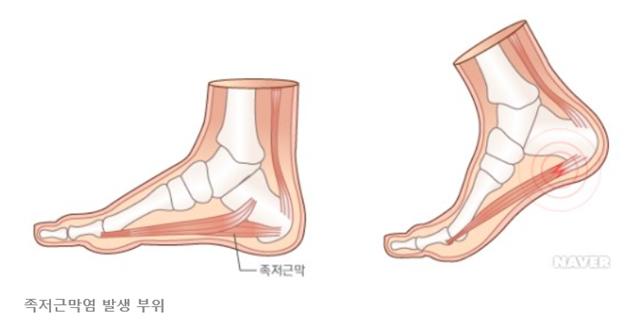
In many cases, the problem is in the heel or along the plantar fascia that runs from the heel toward the toes. This is the typical pattern of plantar fasciitis.
However, some patients have a very different pattern:
they complain of pain in the front part of the sole, under the ball of the foot or the bases of the toes.
This can be a form of forefoot plantar pain, often referred to as metatarsalgia.
Common Structural Factors Behind Forefoot Pain
Certain foot shapes can increase load on the front of the foot and contribute to metatarsalgia. For example:
- Long second toe (Morton’s toe) — the second metatarsal bears more load.
- High medial arch (pes cavus) — weight is focused on the heel and forefoot rather than evenly distributed.
- Hallux valgus (bunions) — the first ray does not load normally, shifting pressure to the lesser metatarsals.
When these structural factors are present, walking or running can produce abnormally high pressure in the metatarsal heads, leading to pain in the ball of the foot.
Reviews of metatarsalgia highlight foot structure, arch height, and altered load distribution (e.g., Morton’s toe, hallux valgus, pes cavus) as common contributors to forefoot pain.
(Plantar pressure & foot shape review)
Why It Hurts When You Walk or Run
Every time you walk, run, or climb stairs, your body weight moves forward and passes through the forefoot.
If the foot structure or gait mechanics interfere with normal load sharing, the:
- metatarsal heads (bones in the ball of the foot)
- supporting soft tissues beneath them
are exposed to higher stress. Over time, this repetitive overload appears clinically as forefoot plantar pain.
Rest Is Simple but Not Easy
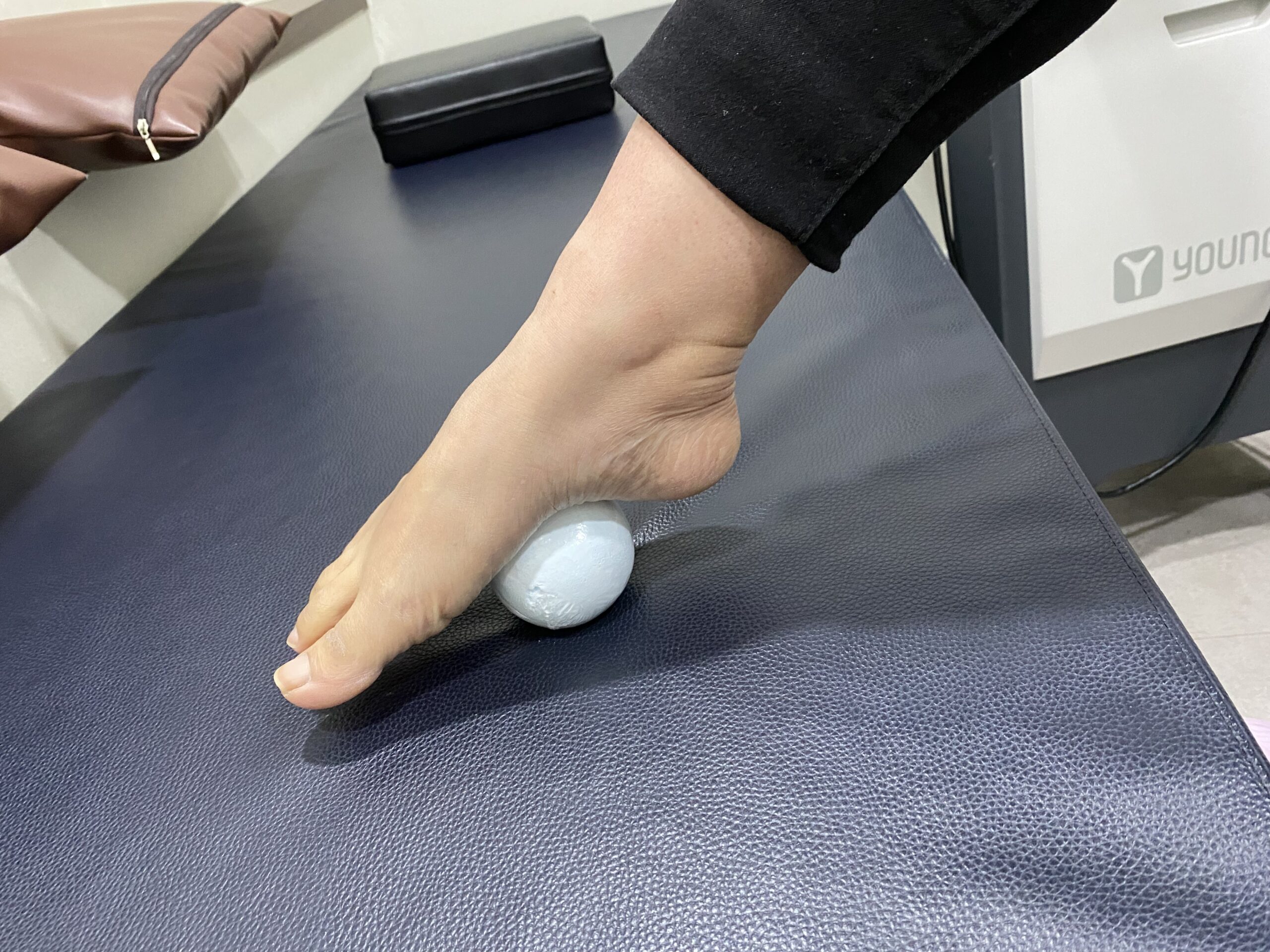
In theory, the best treatment for mechanical overload is rest:
- reducing walking, running, and prolonged standing
- avoiding high-impact or forefoot-heavy activities for a while
In reality, most people cannot simply “stop using” their feet in daily life.
This is why we also pay attention to footwear and other supportive strategies.
Footwear: A Small Change That Makes a Big Difference
Switching to shoes with:
- good cushioning under the forefoot (well-designed midsole/air cushioning)
- sufficient toe box width (especially if you have hallux valgus)
- appropriate arch support for your foot type
can help reduce pressure and repeated micro-trauma to the front of the sole.
Clinical reviews support the role of footwear modification and orthoses in managing metatarsalgia by redistributing plantar pressure.
(Metatarsalgia management review)
Our Treatment Approach at MADI-BONE CLINIC
For plantar pain in the forefoot, we usually do not rely primarily on oral anti-inflammatory medication or repeated “ligament regeneration” injections.
Instead, we often plan treatment around:
- extracorporeal shockwave therapy (ESWT) to reduce pain and stimulate tissue healing
- plantar pressure offloading with cushioning and, if needed, orthotic support
- activity and gait modification to avoid overload patterns
Shockwave Therapy (ESWT)
Shockwave therapy can:
- help relieve pain in chronic plantar soft tissue problems
- promote neovascularization (new blood vessel formation) and tissue regeneration
While the strongest evidence is for plantar fasciitis, several studies and clinical series support ESWT as a useful noninvasive option for chronic plantar and forefoot pain syndromes, especially when combined with load management and footwear changes.
See, for example, plantar fascia ESWT trials:
Gerdesmeyer et al., RCT;
systematic review.
When to Consider a Clinic Visit
- Forefoot pain persists for more than a few weeks despite changing shoes and reducing activity.
- Pain makes it difficult to walk, stand for work, or exercise.
- You have structural issues (long second toe, high arch, hallux valgus) and symptoms keep returning.
- Pain is localized and sharp, raising concern for stress fracture or other pathology (this requires proper evaluation).
What to Expect at MADI-BONE CLINIC
At MADI-BONE CLINIC, we:
- take a careful history of your symptoms and activity level
- examine foot structure, arch height, and toe alignment
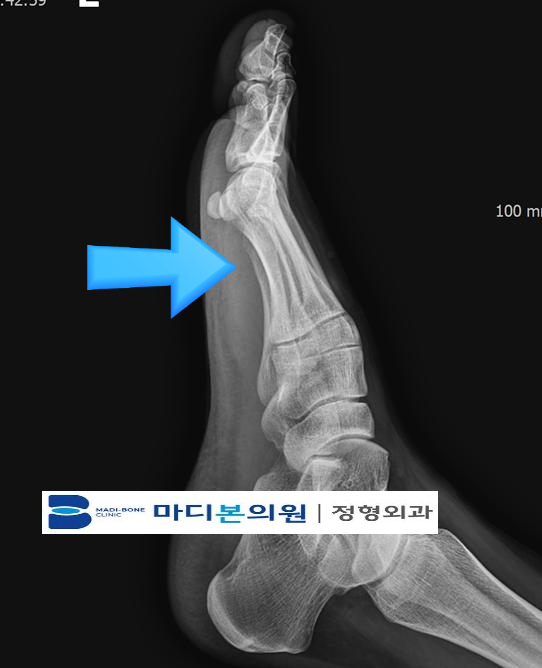
- consider imaging when needed (X-ray, ultrasound, or further if indicated)
- create a plan combining shockwave therapy, footwear advice, and load modification
Our goal is not only to reduce pain but also to address the mechanical cause behind your forefoot symptoms.
MADI-BONE CLINIC (Seolleung Station, ~3 min on foot)
MADI-BONE CLINIC
3F, 428 Seolleung-ro, Gangnam-gu, Seoul
Seolleung Station (Line 2), Exit 1 — ~3 minutes on foot
02-736-2626
⏰ Mon–Fri 09:30–18:30 / Sat 09:30–13:00 (Closed Sundays & Public Holidays)
References (for interested readers)
- Cavanagh PR, et al. The biomechanics of the foot and ankle in walking and running. Plantar pressure & foot structure insights. PubMed
- Bus SA, et al. Footwear and insole design for pressure redistribution. PubMed
- Gerdesmeyer L, et al. Radial extracorporeal shock wave therapy is safe and effective in the treatment of chronic plantar fasciitis. RCT
- Thomson CE, et al. Extracorporeal shockwave therapy for plantar heel pain (systematic review). PubMed
This article is for educational purposes and does not replace an individual medical evaluation or treatment plan.