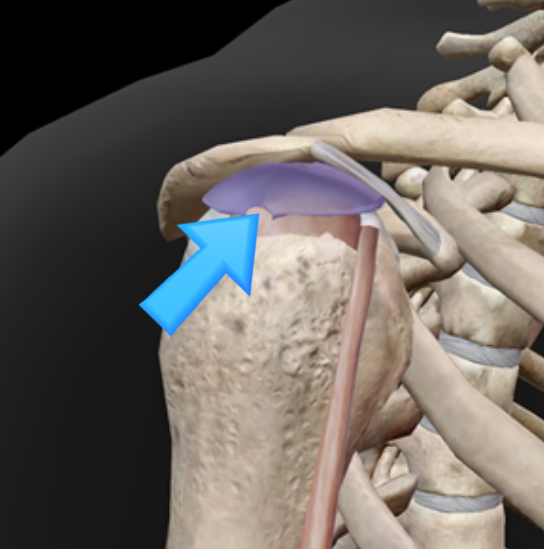
Why Golfers Relapse — It’s Not One Swing, It’s Load Spikes
By MADI-BONE CLINIC | Gangnam (Seolleung Station)
The Pattern We See Every Golf Season
Many golfers improve for a few days after treatment—then flare again once they resume full rounds, range sessions, or short-game volume. This isn’t “bad luck.” It’s a load spike problem: when the training load rises faster than the tendon’s current capacity, micro-trauma accumulates and symptoms rebound.
What Drives Relapse? (Mechanisms)
- Capacity < Load: Tissue capacity is limited by age, sleep, prior injury, and current strength/endurance. Large or sudden increases in hitting volume, intensity, or frequency outpace that capacity.
- Micro-trauma accumulation: Small, repeated strain without adequate recovery progresses along the tendinopathy continuum (reactive → disrepair → degeneration). Evidence supports this model across sports. Cook & Purdam 2009; 2016 update.
- Load spikes as a distinct risk: In sport science, abrupt workload jumps are consistently linked to injury risk—the “train smarter, not just more” paradox. Gabbett 2016.
Why Injections Alone Don’t Prevent Relapse
A short-term pain drop (e.g., corticosteroid) can be useful to unlock rehab—but it does not increase tissue capacity. Studies in lateral epicondylalgia show faster early relief with steroids yet higher recurrence and worse long-term outcomes compared with exercise-based care. We therefore select indications carefully and pair any analgesic strategy with graded loading. Bisset et al., BMJ 2006; Coombes et al., JAMA 2013; summary BMJ Open 2013.
What Actually Prevents the Bounce-Back
1) Brief Deload (Calm the Fire)
- Pause the most aggravating drills for 3–5 days; maintain light cardio or non-provoking work.
- Reduce total swings, bucket size, and short-game repetitions temporarily.
2) Build Capacity (Graded Loading)
- Eccentric or heavy-slow resistance (HSR) for wrist extensors/flexors: 3–5 s lowering, 12–15 reps × 2–3 sets, within tolerable pain. Progress load weekly if symptoms are stable. Overview: BMJ review.
- Include forearm stretching (30–40 s × 2–3) and scapular/posture work to improve kinetic-chain support.
3) Smarter Return-to-Play (No Sudden Jumps)
- Increase volume by ~10–20% per week. If pain escalates (>24-hour soreness or function drop), step back one level.
- Front-load short-game practice and wedges before driver. Check grip size, wrist angles, and tempo.
4) Adjuncts, Not Replacements
- Ultrasound-guided injection may help short-term symptoms in selected cases to enable rehab—not to replace it.
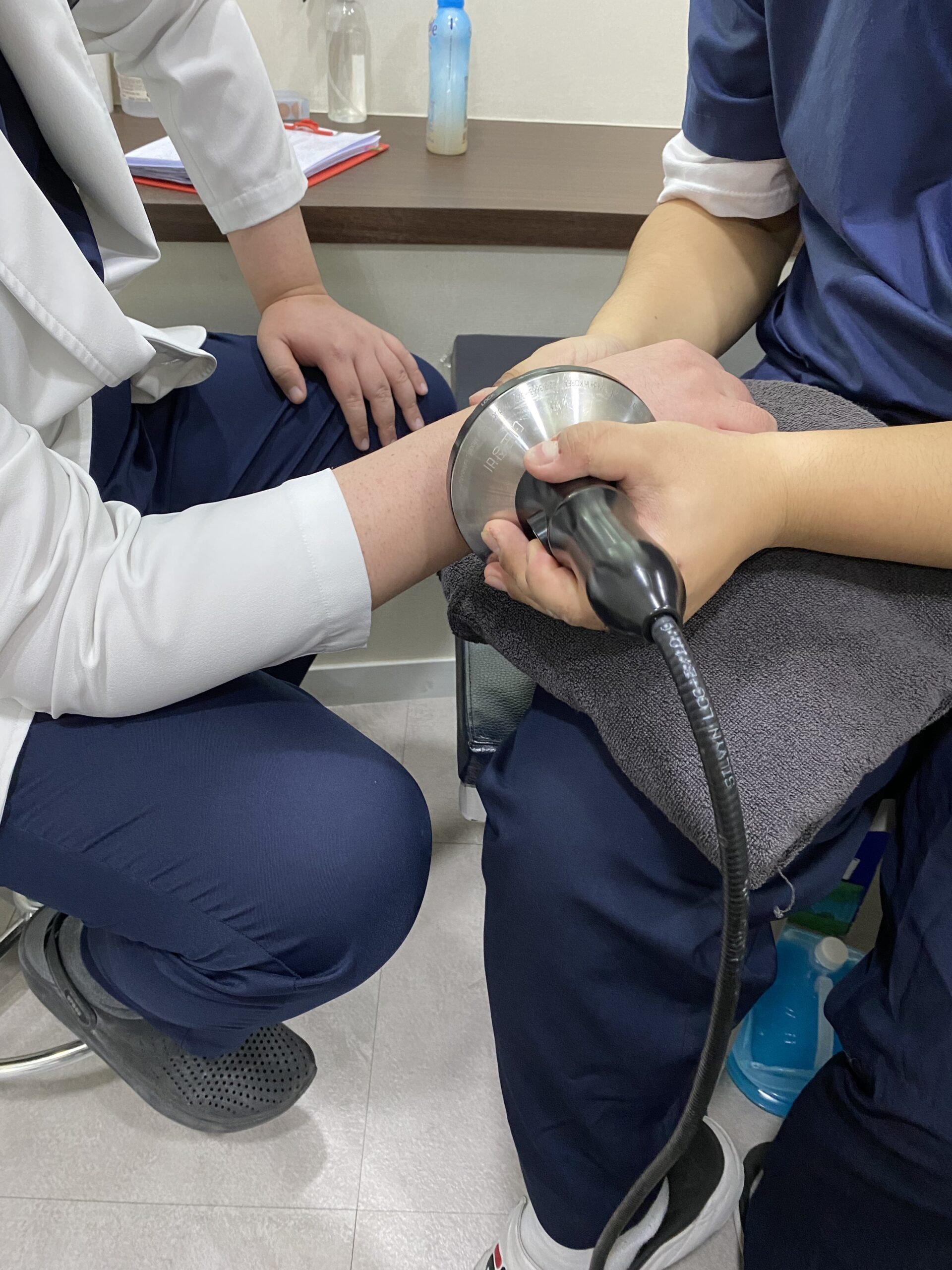
- Shockwave (ESWT) is a noninvasive option in chronic tendinopathy; results vary but may assist when combined with loading programs. Schmitz 2015 review.
- PRP/PDRN: considered case-by-case in refractory disease; evidence is mixed and protocol-dependent. Mishra 2014; PDRN review 2021.
How Long Should It Take?
- 1–2 weeks: pain calmer with deload + early loading.
- 3–6 weeks: measurable endurance and tolerance gains (HSR works slowly but durably).
- 6–12 weeks: capacity catches up to typical practice volume—if you avoided spikes.
Relapse risk remains if you jump from “okay at 60 balls” straight to “120 + 18 holes.” Keep increases gradual.
When to See a Clinician
- Pain persists or worsens despite a week of deload + basic rehab
- Notable weakness, grip loss, numbness/tingling, or suspected tendon tear
- Night pain, fever, or post-traumatic swelling/bruising
MADI-BONE CLINIC (Seolleung Station, ~3 min on foot)
MADI-BONE CLINIC
3F, 428 Seolleung-ro, Gangnam-gu, Seoul
Seolleung Station (Line 2), Exit 1 — ~3 minutes on foot
02-736-2626
⏰ Mon–Fri 09:30–18:30 / Sat 09:30–13:00 (Closed Sundays & Public Holidays)
Sources
- Cook JL, Purdam CR. Is tendon pathology a continuum? Br J Sports Med. 2009; Revisiting the continuum 2016.
- Gabbett TJ. The training–injury prevention paradox. Br J Sports Med. 2016.
- Bisset L, et al. Mobilisation/exercise vs corticosteroid injection (lateral epicondylalgia RCT). BMJ, 2006 (open: PMC).
- Coombes BK, et al. Corticosteroid injection, physiotherapy, or both. JAMA, 2013; summary BMJ Open, 2013.
- Schmitz C, et al. ESWT in musculoskeletal disorders (systematic review). 2015.
- Mishra AK, et al. PRP for chronic tennis elbow. Am J Sports Med, 2014.
Recommended Reading
- EP.1 — “You Can See It Without an X-ray”: Forward Head Posture
- EP.2 — 3 Routines You Can Start Today to Fix FHP
- EP.3 — Why FHP Correction Is Slow in Adults (Degeneration Model)
This article is educational and does not replace an individual medical evaluation or treatment plan.