Sitting increases spinal pressure and scoliosis risk in youth. Learn why posture matters and how adults and teens should manage it.
Why Sitting Increases Disc & Scoliosis Risk
By MADI-BONE CLINIC — Seolleung, Gangnam
Sitting Loads the Spine Far More Than Standing or Lying Down
Most people assume the spine experiences the greatest pressure while standing,
but research shows the opposite.
When lying flat, the lumbar discs experience the least stress.
However, when sitting upright, disc pressure rises to three times that of lying down.
Disc pressure studies confirm increased load in sitting posture.
Nachemson Disc Pressure Study
This means that long sitting hours—especially in poor posture—can accelerate disc fatigue,
weaken spinal stabilizing muscles, and worsen existing spinal alignment issues.

Korean Students Sit Longer Than Most Adolescents Worldwide
One of the biggest concerns in Korea is the exceptionally long study hours.
Students often sit for:
- school hours
- after-school academies
- private tutoring
- home study
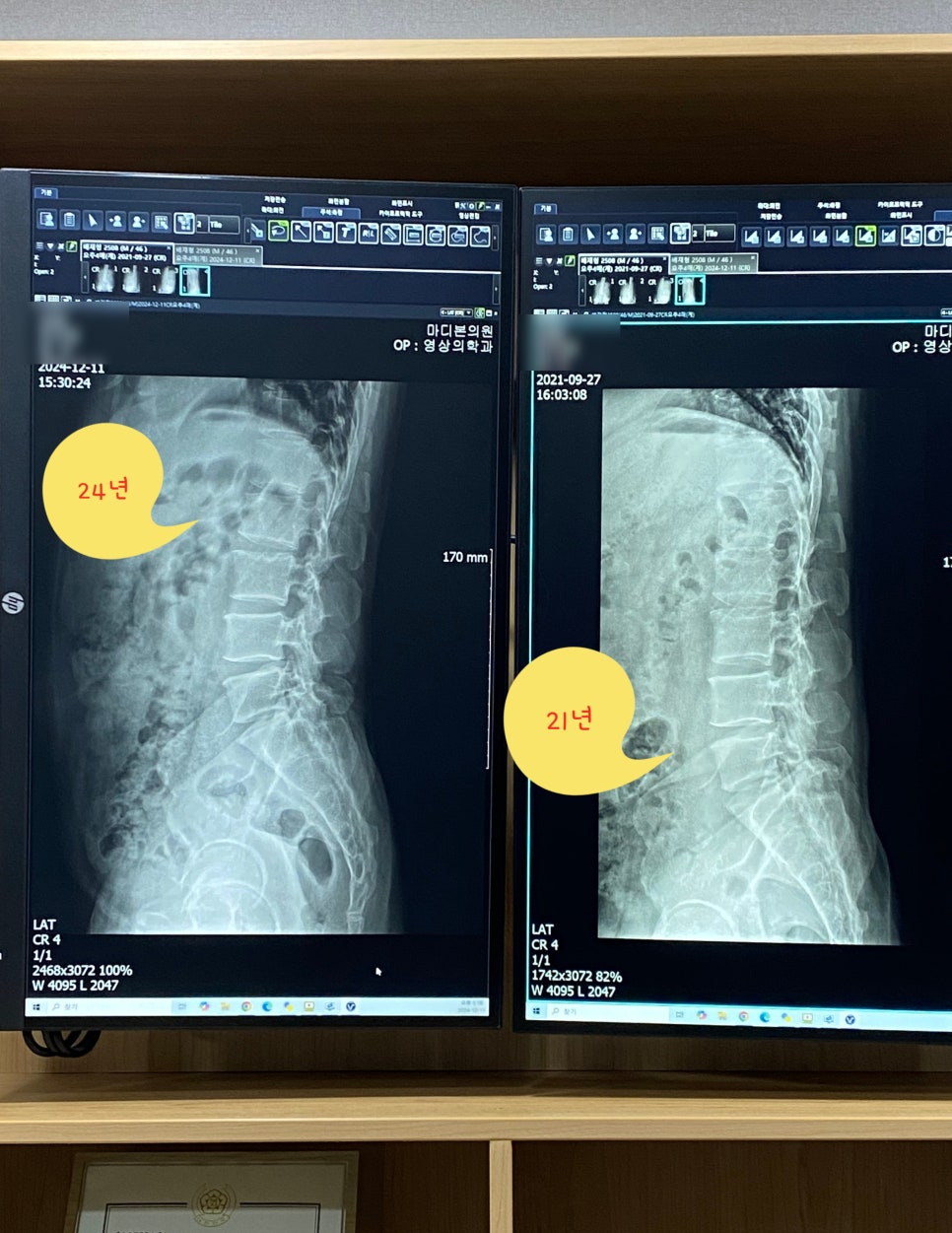
According to a regional study of 100,000 students (2012),
4.7% of boys and 9.1% of girls showed scoliosis greater than 10 degrees.
This prevalence is strongly associated with prolonged sitting and reduced physical activity.
During adolescence, the spine, pelvis and surrounding muscles must strengthen through movement.
But instead, long static sitting increases the risk of:
- postural scoliosis
- worsening mild curvature
- deconditioning of core and paraspinal muscles
Why Adolescents Are Especially Vulnerable
Scoliosis progression is linked to the growth period.
During rapid growth, spinal curvature can worsen quickly if posture is poor or muscles are weak.
Once growth ends, scoliosis typically stabilizes — which means:
Early detection is crucial because worsening curvature cannot be reversed easily later.
If a teenager has:
- asymmetric shoulders
- uneven waist creases
- head positioned off-center
…an evaluation should not be delayed.
Adults With Scoliosis: When Is Treatment Needed?
For adults, scoliosis progression is slower.
If pain is mild, we usually begin with exercise-based management:
- core strengthening
- postural training
- flexibility and mobility programs
But treatment becomes necessary when:
- curvature increases over time
- back pain becomes persistent
- nerve symptoms appear
The goal for adults is typically control, not correction:
preventing further curvature, maintaining mobility, and reducing pain.
Why Sitting Makes Both Disc and Scoliosis Problems Worse
1. Higher disc pressure
As mentioned, sitting loads the lumbar discs heavily,
especially when leaning forward or slouching.
2. Weakening of paraspinal and pelvic stabilizers
Sitting turns stabilizing muscles “off” for long periods.
These muscles fatigue and lengthen when they should be supporting posture.
3. Tight hip flexors and hamstrings
Modern sedentary lifestyles shorten these muscles,
pulling the pelvis forward and altering spinal alignment.
4. Asymmetric posture habits in teens
Crossed legs, leaning over books, or resting on one elbow
create rotational forces that can accelerate scoliosis progression.
The Role of Manual Therapy in Managing Scoliosis
Both adolescents and adults benefit from manual therapy.
It helps:
- improve spinal mobility
- reduce muscular asymmetry
- correct compensatory posture
- enhance breathing mechanics
However, manual therapy requires consistency and time.
Scoliosis management is a process, not a quick fix.

When Should Adolescents Seek Evaluation?
Evaluation is strongly recommended when:
- posture appears asymmetric
- pain develops during studying
- growth spurt is occurring
- family history of scoliosis exists
Scoliosis worsens fastest during early and mid puberty.
Early treatment prevents long-term problems.
How Adults Can Prevent Scoliosis Worsening
- consistent core strengthening
- proper ergonomic workstation
- regular stretching of hip flexors and hamstrings
- avoiding prolonged sitting
- manual therapy when needed
Internal Links — Related Education
More detailed articles from MADI-BONE CLINIC:
- Why Pain Persists Without Fracture
- When MRI Truly Matters for Injury Detection
- Winter Falls: What Hurts Most and Why
Frequently Asked Questions (FAQ)
1. Can sitting really worsen scoliosis?
Yes — prolonged sitting increases disc load and muscle imbalance, accelerating curvature in vulnerable adolescents.
2. Does scoliosis always require treatment?
Not always.
Treatment depends on curve size, pain, functional limits and progression.
3. Can adults improve scoliosis?
Curvature usually cannot be reversed, but progression can be slowed
and pain can be significantly reduced with proper management.
MADI-BONE CLINIC — Seolleung Station
MADI-BONE CLINIC
3F, 428 Seolleung-ro, Gangnam-gu, Seoul
Seolleung Station Exit 1 — 3 minutes on foot
02-736-2626
⏰ Mon–Fri 09:30–18:30 / Sat 09:30–13:00