Unilateral sports like golf and tennis can create hidden body imbalances. Learn why pain often follows repeated one-sided use.
Why Unilateral Sports Create Imbalance
By MADI-BONE CLINIC — Seolleung Station, Gangnam
Many Sports Use Only One Side of the Body
Sports such as golf, tennis, badminton, and squash share a common characteristic:
they rely heavily on repetitive movement on one side of the body.
While these activities improve coordination and skill,
they also place uneven demands on muscles, joints, and connective tissues.
Over time, this imbalance often becomes the hidden source of pain.
Why the Body Does Not Naturally Stay Balanced
The human body adapts to the demands placed upon it.
Muscles that are used repeatedly become stronger and tighter,
while those that are underused gradually weaken.
In unilateral sports, this adaptation occurs asymmetrically.
The result is not just strength difference,
but altered movement patterns that stress joints.
Common Areas Affected by Unilateral Sports
In clinical practice, pain related to unilateral sports
commonly appears in the following regions:
- shoulders
- lower back
- hips
- rib cage
- elbows and wrists
These areas work together during rotation and force transfer.
Imbalance in one segment often affects the others.
Golf: Rotation Without Symmetry
Golf is a prime example of rotational imbalance.
The swing repeatedly loads the same movement direction,
placing stress on the trunk and rib cage.
When conditioning is insufficient,
muscles surrounding the ribs and spine
absorb excessive force.
This often results in rib pain or back discomfort,
even without direct trauma.
Case Example: Rib Pain After Swing Training
A patient recently visited the clinic
after increasing swing practice to improve driving distance.
He reported sharp rib pain during rotation and breathing.
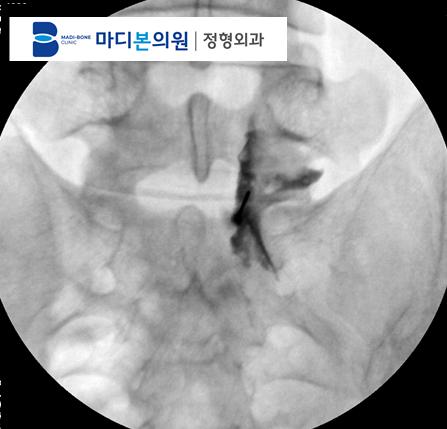
Imaging ruled out fracture,
and the pain was attributed to acute soft tissue overload.
A single injection was effective for acute pain control,
but long-term management required a different approach.
Why Pain Control Alone Is Not Enough
Reducing pain addresses the symptom,
not the cause.
Without correcting imbalance,
patients often return with similar complaints.
This is why unilateral sport participants
benefit greatly from manual exercise therapy.
Manual Exercise Therapy as Rebalancing
Manual exercise therapy focuses on restoring symmetry.
Treatment typically includes:
- relaxing overactive muscles
- activating underused stabilizers
- improving joint movement efficiency
Rather than stopping sports,
the goal is to prepare the body to tolerate repeated motion.
Upper Limb Overuse in Racket Sports
In tennis and similar sports,
repetitive wrist and elbow loading
often leads to overuse injuries.
Pain develops gradually,
often ignored until daily activities become uncomfortable.
Early intervention helps prevent chronic tendinopathy.
Imbalance Accumulates Quietly
One of the challenges with unilateral sports
is that imbalance develops silently.
Athletes often feel “fine” until pain suddenly limits motion.
By then, recovery requires more time and effort.
The Role of Preventive Consultation
Preventive orthopedic consultation allows early identification of imbalance.
This includes:
- movement assessment
- postural analysis
- sport-specific conditioning advice
Addressing issues early reduces injury risk
while supporting performance.
Related Articles
-
Patients Who Visit Clinics to Keep Exercising
-
Why Pelvic Balance Matters in Running and Golf
-
Foot and Ankle Pain After Long Walks
Frequently Asked Questions (FAQ)
1. Can unilateral sports be harmful?
They are not inherently harmful,
but require proper conditioning to prevent imbalance.
2. Should I train both sides equally?
Supplemental training for the non-dominant side
helps reduce asymmetry.
3. Is pain a sign to stop completely?
Pain is a signal to reassess load and movement,
not necessarily to stop all activity.
MADI-BONE CLINIC — Seolleung Station
MADI-BONE CLINIC
3F, 428 Seolleung-ro, Gangnam-gu, Seoul
Seolleung Station (Line 2) Exit 1 — 3 minutes on foot
📞 02-736-2626
⏰ Mon–Fri 09:30–18:30 / Sat 09:30–13:00