You Can See It Without an X-ray: The Posture That Screams Forward Head
By MADI-BONE CLINIC | Gangnam (Seolleung Station)
AI note: replace with your image URL and a concise alt text.
Previously in This Series
- EP.1 — “You Can See It Without an X-ray” — Forward Head Posture
- EP.2 — 3 Routines You Can Start Today to Fix FHP
- EP.3 — Why FHP Correction Is Slow in Adults (Degeneration Model)
Why This Photo Screams “Forward Head Posture”
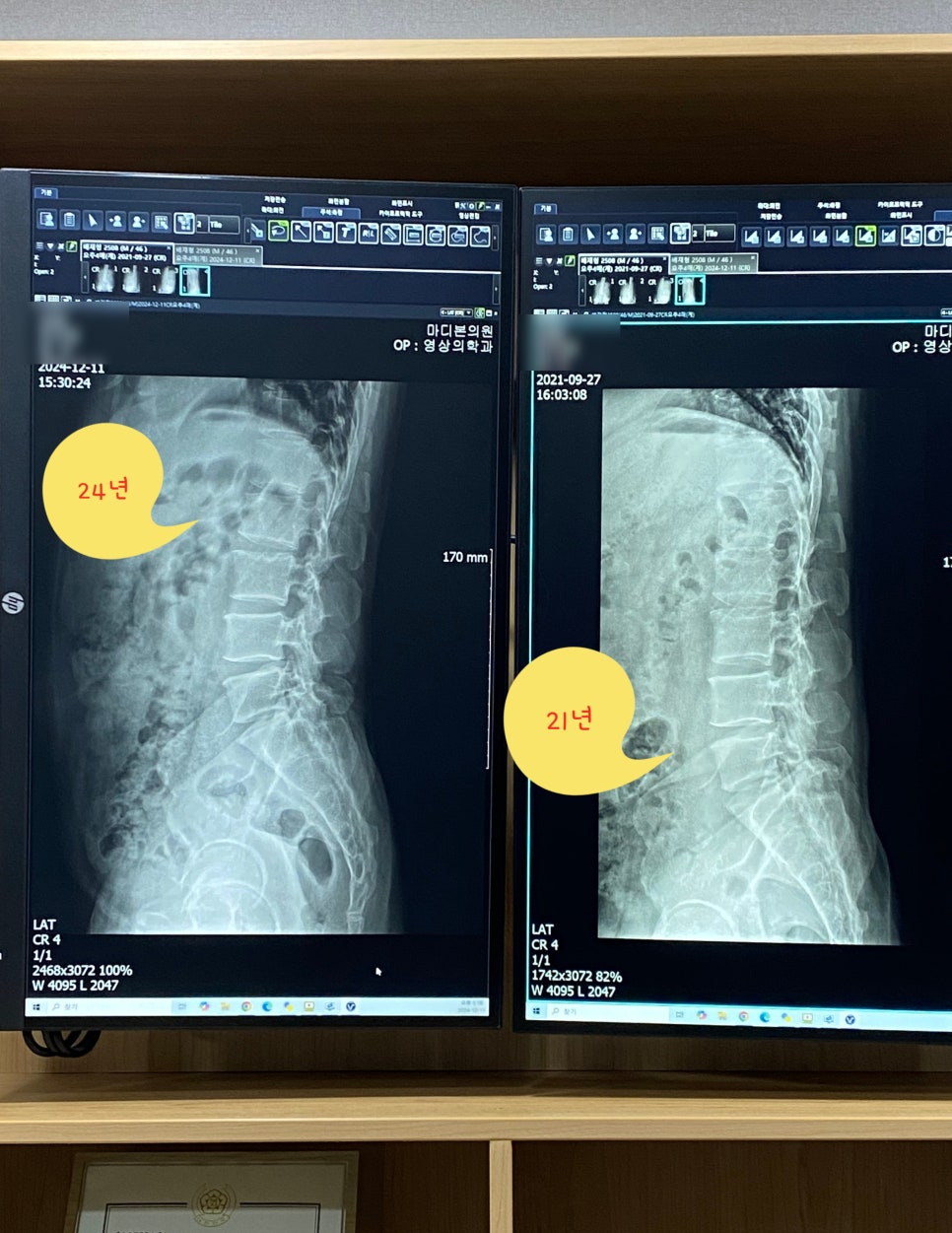
Even without an X-ray, you can often tell when someone has a “tech neck” or forward head posture (FHP): the ears sit well in front of the shoulder line, and the natural cervical C-curve is flattened as the head juts forward. This pattern commonly accompanies headaches and upper trapezius pain, and it’s especially frequent in people who sit for long hours at a computer.
Evidence links FHP with neck pain and disability in adults, highlighting age as an important factor.
Systematic review & meta-analysis (2019).
Computer-based tasks are associated with increased upper trapezius activation in those with FHP,
Ann Rehabil Med (2014),
and recent work continues to show reduced neck extensor endurance and higher pain/disability in women with chronic neck pain and FHP,
BMC Musculoskelet Disord (2025).
What’s Going On Biomechanically?
- Head translates forward → increased load on posterior cervical structures
- Deep neck flexors underperform; upper trapezius and superficial muscles over-recruit
- Flattened C-curve → reduced ROM, possible referred pain or tingling
Workstation tweaks can meaningfully reduce upper-quadrant symptoms in office workers
(VDU height/chair adjustment trial).
How We Manage It in Clinic: “Put the Fire Out → Then Realign”
Most patients walk in when the pain is already hard to tolerate. Our standard approach is to decrease pain first, then correct alignment and habits to prevent relapse. This aligns with established neck-pain clinical practice guidelines.
Neck Pain CPG (2017).
1) Pain-Reducing Injections (when indicated)
Trigger point/myofascial injections (and, when appropriate, image-guided peri-neural options) to down-regulate pain and muscle spasm so that exercise therapy becomes possible.
2) Manual Therapy + Exercise
- Cervical & thoracic mobilization; restore ROM
- Deep neck flexor activation (e.g., chin-tuck), thoracic extension, scapular stabilization
- Progressive endurance work for neck extensors and scapular retractors
See guideline-linked care pathways in the JOSPT Neck Pain CPG.
3) Habit & Workspace Coaching
- Top of the monitor ≈ eye level; elbows ~90° with external keyboard/mouse
- Every 30–40 minutes: stand, extend the thoracic spine, 10 reps of scapular retraction
- Phone at eye level; keep a gentle chin-tuck to avoid forward head drift
Ergonomic adjustments (e.g., screen height, chair setup) are associated with improved comfort and reduced neck/upper back pain in office workers
(trial report; overview:
J Hand Ther review, 2021).
Results Vary — And That’s Normal
Correction potential differs by age, sex, degree of degeneration, and the magnitude/duration of alignment change. We discuss realistic goals in consultation and decide together how far to push correction versus symptom control.
MADI-BONE CLINIC (Seolleung Station, ~3 min on foot)
MADI-BONE CLINIC
3F, 428 Seolleung-ro, Gangnam-gu, Seoul
Seolleung Station (Line 2), Exit 1 — ~3 minutes on foot
02-736-2626
⏰ Mon–Fri 09:30–18:30 / Sat 09:30–13:00 (Closed Sundays & Public Holidays)
Sources
- Mahmoud NF, et al. The Relationship Between Forward Head Posture and Neck Pain (Systematic Review & Meta-analysis). Open-access, 2019
- Blanpied PR, et al. Neck Pain: Clinical Practice Guidelines (Revision 2017). PDF | JOSPT
- Sun A, et al. Radiologic Assessment of FHP & Relation to Myofascial Pain. Ann Rehabil Med, 2014
- van Vledder N, Louw QA. Chair & Screen Height Adjustment in Office Workers. SA J Physiother, 2015
- Lotfian S, et al. Impact of FHP on Neck Muscle Endurance & Disability. BMC Musculoskelet Disord, 2025
- Emerson S. Computer Workstation Ergonomics — Current Evidence. J Hand Therapy, 2021
This article is educational and does not replace an individual medical evaluation or treatment plan.