
Written & Reviewed by
Dr. Choe Jeongheon
General Surgeon · Orthopedic Clinic Director · MD, PhD
Founder of MADI-BONE CLINIC, Seoul. 10+ years of experience in musculoskeletal medicine and private orthopedic care.
Frozen shoulder — medically known as adhesive capsulitis — is one of the most frustrating musculoskeletal conditions a patient can experience. Not because it is dangerous, but because of its defining characteristic: it reliably gets worse before it gets better, often for months, regardless of what the patient does.
Understanding why this happens — and what can actually be done to shorten the process — makes an enormous difference to how patients navigate the condition.
What Is Frozen Shoulder?
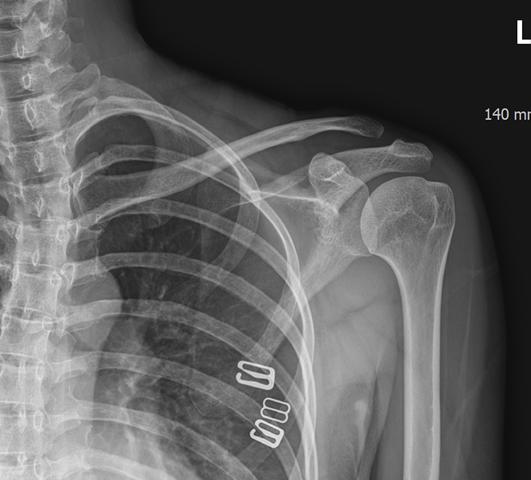
Frozen shoulder is a condition in which the capsule surrounding the shoulder joint becomes inflamed, thickened, and progressively scarred. As the capsule contracts, it restricts movement in all directions — particularly external rotation and overhead reach — and causes persistent pain, often severe at night.
It affects approximately 2–5% of the general population, with a significantly higher incidence in:
- People aged 40–60 (peak incidence)
- Women more than men
- People with diabetes — who have a 10–20% lifetime risk and tend to experience more severe and prolonged cases
- People who have had a period of shoulder immobilization following injury or surgery
- People with thyroid disorders
In many cases, frozen shoulder develops without any obvious trigger — which adds to the confusion and frustration patients feel when trying to understand what is happening to their body.
The Three Stages — Why It Gets Worse First
Frozen shoulder follows a characteristic three-stage progression. Understanding these stages is essential for setting realistic expectations and choosing the right treatment at the right time.
Stage 1: Freezing (2 – 9 months)
This is the most painful stage. The shoulder capsule is actively inflamed, and pain increases progressively — often becoming severe at night, disrupting sleep, and significantly limiting daily activities. Range of motion begins to reduce, but pain is the dominant feature at this stage.
Many patients find this stage the most distressing because the pain keeps worsening despite rest, anti-inflammatories, and initial physiotherapy. This is not treatment failure — it is the natural trajectory of the condition. But it is also the stage where targeted intervention makes the most meaningful difference to the patient’s quality of life.
Stage 2: Frozen (4 – 12 months)
In this stage, the acute inflammation begins to subside — and with it, the intensity of pain often decreases. However, the shoulder capsule is now significantly contracted and scarred, resulting in severely restricted range of motion in all directions.
Patients often describe this stage as “the pain is a bit better but I still can’t move my arm.” The shoulder is stiff rather than acutely painful. Daily tasks requiring overhead reach, reaching behind the back, or dressing become challenging.
Stage 3: Thawing (6 – 24 months)
Gradually, the capsule begins to loosen and range of motion slowly returns. This stage can take anywhere from several months to over two years. Most patients ultimately recover full or near-full function — but the timeline is highly variable and can feel discouragingly slow.
Total duration without treatment intervention: 1 – 3 years. With appropriate treatment, this can be meaningfully shortened.
What Actually Helps — and When
Stage 1 (Freezing): Pain Control Is the Priority
During the freezing stage, the primary goal is managing pain effectively enough that the patient can sleep, function, and begin gentle movement. This is where nerve block injections play a critical role.
At MADI-BONE CLINIC, we use ultrasound-guided intra-articular injections to deliver anti-inflammatory medication directly into the shoulder joint capsule. The precision of ultrasound guidance ensures the medication reaches the inflamed tissue rather than the surrounding structures.
The benefits of targeted injection at this stage include:
- Rapid reduction of capsular inflammation — addressing the underlying driver of pain, not just masking symptoms
- Restoration of sleep — night pain is one of the most debilitating features of frozen shoulder, and sleep disruption significantly slows recovery
- Creating a window for rehabilitation — pain that is severe enough to prevent all movement makes physiotherapy impossible. Injection therapy opens a window during which manual therapy can begin
Stage 2 (Frozen): Manual Therapy Becomes Central
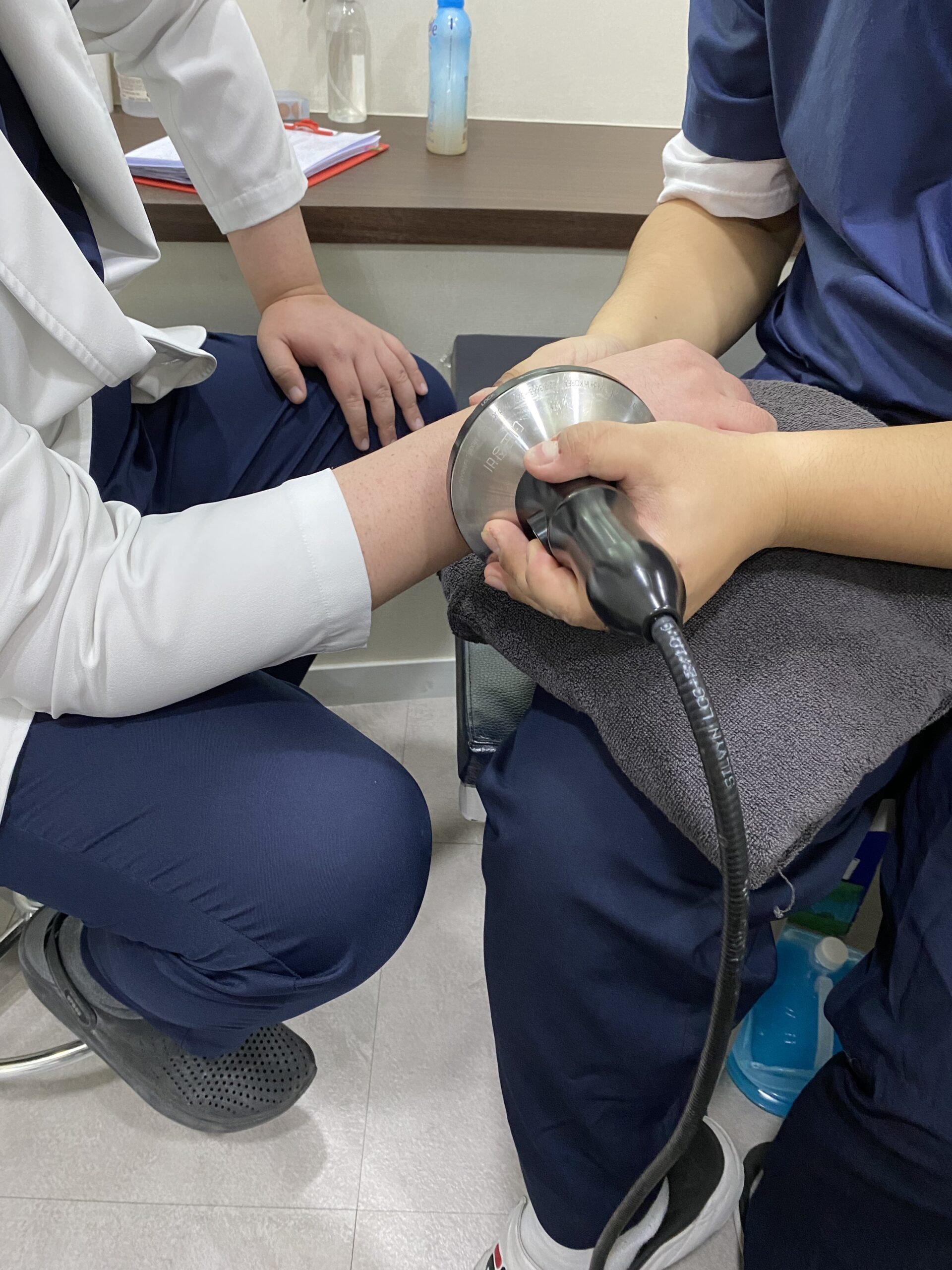
Once acute inflammation has subsided, the focus shifts to the contracted capsule itself. This is where manual therapy becomes the primary treatment tool.
At MADI-BONE CLINIC, manual therapy for frozen shoulder focuses on:
- Joint mobilization — carefully graded passive movement of the shoulder joint to gently stretch the contracted capsule without provoking re-inflammation
- Soft tissue work — addressing the secondary muscle tightness and guarding that develops around the shoulder during the freezing stage
- Scapular mobility — the shoulder blade often becomes restricted as the body compensates for reduced glenohumeral movement. Restoring scapular mobility is essential for full recovery
- Progressive home exercise program — specific stretches and range-of-motion exercises that the patient continues between sessions to maintain gains
Manual therapy at this stage requires patience and precision. Too aggressive, and the capsule re-inflames. Too gentle, and progress stalls. The goal is consistent, progressive improvement in range of motion without triggering a pain flare.
Combined Approach: Injection + Manual Therapy
The most effective treatment protocol for frozen shoulder combines both approaches in sequence. Injection therapy controls inflammation and pain → manual therapy restores mobility and function.
This combined approach has been shown to produce faster recovery and better outcomes than either treatment alone. At MADI-BONE CLINIC, this is our standard protocol for frozen shoulder — timed to the patient’s current stage and adjusted based on response.
What Does NOT Help (Despite Being Commonly Tried)
Several approaches are frequently attempted for frozen shoulder with limited or no evidence of benefit:
- Complete rest and immobilization — counterproductive beyond the acute pain phase. Immobility accelerates capsular scarring.
- Aggressive stretching during the freezing stage — stretching an acutely inflamed capsule increases inflammation and worsens pain. Aggressive stretching is appropriate in Stage 2, not Stage 1.
- Oral anti-inflammatories alone — provide modest short-term symptom relief but do not alter the disease course or timeline.
- Waiting it out without any intervention — while frozen shoulder does eventually resolve on its own, untreated cases consistently take longer and result in more residual stiffness than appropriately managed cases.
How Long Will Recovery Take With Treatment?
| Approach | Typical Recovery Timeline |
|---|---|
| No treatment (natural resolution) | 1 – 3 years |
| Physiotherapy alone | 12 – 18 months |
| Injection therapy alone | 9 – 15 months |
| Injection + Manual therapy (combined) | 6 – 12 months |
Timelines are general estimates. Diabetic patients and those with severe capsular contracture may require longer treatment courses.
When Is Surgery Considered?
Surgery for frozen shoulder — typically arthroscopic capsular release — is reserved for cases that have not responded to 12–18 months of appropriate conservative management. This represents a minority of patients.
At MADI-BONE CLINIC, we have not found it necessary to refer patients for surgical consultation in the majority of frozen shoulder cases managed with our combined injection and manual therapy protocol.
The Most Important Thing to Understand
Frozen shoulder is not a condition you did something wrong to cause, and it is not a condition where pushing through pain aggressively will speed recovery. It has its own timeline — but that timeline can be meaningfully shortened with the right treatment at the right stage.
If you are currently in the painful freezing stage, effective pain control through targeted injection is the priority. If you are in the frozen stage with restricted movement, structured manual therapy is the key to restoring function.
At MADI-BONE CLINIC in Seoul’s Gangnam district, we see frozen shoulder patients at all stages and tailor treatment to where you are in the process — not a one-size-fits-all protocol.
This article was written and reviewed by Dr. Choe Jeongheon, General Surgeon · Orthopedic Clinic Director · MD, PhD. Founder of MADI-BONE CLINIC, Seoul. This content is for informational purposes only and does not constitute medical advice. Always consult a qualified healthcare professional for diagnosis and treatment planning.