
Written & Reviewed by
Dr. Choe Jeongheon
General Surgeon · Orthopedic Clinic Director · MD, PhD
Founder of MADI-BONE CLINIC, Seoul. 10+ years of experience in musculoskeletal medicine and private orthopedic care.
One of the first questions patients ask after a disc herniation diagnosis is: do I actually need surgery? And if not — how long is this going to take?
The reassuring answer is that the majority of disc herniations improve without surgery. But “improve” doesn’t always mean what patients expect — and the timeline varies significantly depending on the severity of the herniation, the symptoms involved, and how the condition is managed.
Here’s what the evidence says about recovery timelines, and what actually makes a difference.
The Natural History of Disc Herniation: What Happens Without Treatment
Disc herniations have a well-documented tendency toward natural resolution. The herniated disc material — which is largely composed of water-rich nucleus pulposus — gradually dehydrates, shrinks, and is reabsorbed by the body over time through a process called spontaneous resorption.
Research consistently shows that:
- Approximately 60–70% of patients experience significant improvement within 6 weeks with conservative management
- Around 80–90% of patients recover satisfactorily within 3 months without surgery
- Larger herniations — counterintuitively — tend to resorb more completely than smaller ones, because the greater exposure to the immune system triggers a more active resorption response
However, “natural history” assumes some level of appropriate management. Left entirely unaddressed — continuing the activities that caused the problem, ignoring posture, avoiding movement — recovery can stall or worsen.
Realistic Recovery Timelines by Severity
| Severity | Symptoms | Expected Recovery |
|---|---|---|
| Mild | Local back or neck pain, minimal radiation | 2 – 6 weeks |
| Moderate | Radiating leg or arm pain (sciatica), numbness | 6 – 12 weeks |
| Severe | Significant nerve compression, weakness, persistent numbness | 3 – 6 months |
| Chronic / Recurrent | Ongoing symptoms beyond 6 months despite management | Requires targeted intervention |
These are general estimates. Individual recovery varies significantly based on age, lifestyle, disc level, and treatment approach.
Why Pain Can Feel Worse Before It Gets Better
Many patients are alarmed when their symptoms intensify in the first 1–2 weeks after diagnosis. This is often normal — and does not mean the disc is getting worse.
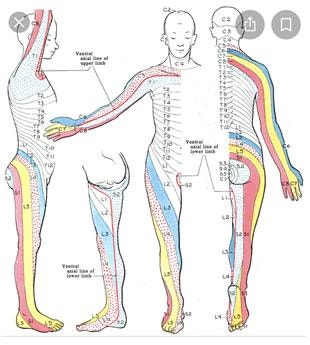
In the acute phase, inflammation around the compressed nerve root peaks before it begins to subside. The nerve itself may also become temporarily more sensitized, amplifying pain signals even as the physical compression is beginning to resolve.
Understanding this cycle is important: early worsening does not necessarily indicate the need for surgery. It often indicates the need for better pain control and nerve inflammation management — which is exactly where targeted intervention makes the biggest difference.
What Actually Speeds Up Recovery
1. Nerve Block Injections — Controlling Inflammation at the Source
One of the most effective ways to accelerate recovery from disc herniation is to directly address the nerve root inflammation that is driving pain and neurological symptoms.
At MADI-BONE CLINIC, we perform epidural nerve block injections and selective nerve root injections under C-arm fluoroscopy guidance — meaning the needle is placed with real-time X-ray visualization to ensure precise delivery to the affected nerve level.
This approach achieves several things simultaneously:
- Rapid pain reduction — allowing the patient to move, sleep, and function normally during the recovery period
- Reduction of nerve root swelling — creating more space in the narrowed canal and reducing the mechanical pressure on the nerve
- Breaking the pain-immobility cycle — patients in severe pain tend to immobilize completely, which slows recovery. Effective pain control enables the movement and rehabilitation that drives healing
Many patients who have been struggling for weeks or months with disc-related leg pain experience meaningful relief within days of a well-placed nerve block — and are then able to engage properly with rehabilitation for the first time.
2. Manual Therapy — Restoring Alignment and Reducing Load on the Disc
Once acute pain is under control, manual therapy plays a central role in recovery at MADI-BONE CLINIC. This is not passive massage — it is a structured, hands-on approach to:
- Restoring spinal joint mobility — stiff segments above and below the herniated disc often overcompensate, increasing load on the already-damaged level
- Correcting postural patterns that contributed to the herniation in the first place — forward head posture, anterior pelvic tilt, and loss of lumbar lordosis all increase disc load and slow recovery
- Reducing muscle guarding — the protective muscle spasm that accompanies disc herniation is initially helpful but becomes a source of ongoing pain if not addressed
- Gradually restoring normal movement patterns — teaching the spine to move safely under load, preventing recurrence
The combination of nerve block for pain control and manual therapy for structural correction is more effective than either approach alone. Pain control without rehabilitation leads to recurrence. Rehabilitation without pain control is often impossible to perform properly.
3. Activity Modification — Not Bed Rest
One of the most important — and most misunderstood — aspects of disc herniation recovery is the role of movement.
Complete bed rest, once commonly recommended, is now known to slow recovery. The evidence consistently supports controlled, progressive movement as superior to immobilization. The goal is to identify positions and activities that do not provoke symptoms and gradually expand from there.
Specifically:
- Short walks are beneficial from the early stages — even 10–15 minutes several times per day
- Prolonged sitting is one of the most aggravating positions for lumbar disc herniations — standing and walking breaks every 30–45 minutes are essential
- Heavy lifting, forward bending under load, and rotational stress should be avoided until symptoms have substantially resolved
4. Sleep Position
Sleep position significantly affects disc pressure and nerve root irritation overnight. For lumbar disc herniation, sleeping on the side with a pillow between the knees reduces spinal rotation and nerve tension. For cervical disc herniation, a supportive pillow that maintains neutral neck alignment is important.
When Is Surgery Actually Necessary?
The vast majority of disc herniations do not require surgery. However, there are specific situations where surgical consultation is appropriate and should not be delayed:
- Cauda equina syndrome — loss of bladder or bowel control, saddle anesthesia (numbness in the groin/inner thigh). This is a medical emergency requiring immediate evaluation.
- Progressive neurological deficit — worsening weakness in the leg or foot (foot drop) that continues to progress despite conservative management
- Failure of conservative management — symptoms that remain severe after 6–12 weeks of appropriate non-surgical treatment including targeted injection therapy and rehabilitation
At MADI-BONE CLINIC, we do not recommend surgery unless the above criteria are met. In our experience, the majority of patients who arrive having been told surgery is their next step respond well to a structured program of nerve block injections and manual therapy — without ever needing an operation.
A Realistic Recovery Plan: What to Expect Week by Week
For a moderate lumbar disc herniation managed with nerve block and manual therapy, here is a realistic week-by-week framework:
- Week 1–2: Acute pain management. Nerve block injection if pain is severe or neurological symptoms are present. Rest from aggravating activities. Gentle walking encouraged.
- Week 3–4: Pain typically begins to reduce. Introduction of manual therapy to address posture and joint mobility. Activity gradually expanded.
- Week 5–8: Progressive rehabilitation. Core stability and postural correction exercises introduced. Return to most normal daily activities.
- Week 9–12: Further functional recovery. Return to exercise and work activities with guidance. Second nerve block if residual neurological symptoms persist.
- 3–6 months: Full recovery for most moderate cases. Ongoing postural habits and exercise maintenance to prevent recurrence.
The Most Important Thing You Can Do Right Now
If you’ve recently been diagnosed with a disc herniation, the single most important step is to get an accurate assessment of your specific situation — the disc level involved, the degree of nerve compression, and whether your symptoms are improving, stable, or worsening.
With that information, a clear and realistic treatment plan can be built — one that controls your pain, supports natural recovery, and avoids surgery in the vast majority of cases.
At MADI-BONE CLINIC in Seoul’s Gangnam district, we combine C-arm guided nerve block injections with structured manual therapy to give disc herniation patients the fastest, safest path to recovery — without surgery.
This article was written and reviewed by Dr. Choe Jeongheon, General Surgeon · Orthopedic Clinic Director · MD, PhD. Founder of MADI-BONE CLINIC, Seoul. This content is for informational purposes only and does not constitute medical advice. If you are experiencing progressive neurological symptoms or loss of bladder/bowel control, seek emergency medical evaluation immediately.