Written & Reviewed by
Dr. Choe Jeongheon
General Surgeon · Orthopedic Clinic Director · MD, PhD
Founder of MADI-BONE CLINIC, Seoul. 10+ years of experience in musculoskeletal medicine and private orthopedic care.
If you’ve been dealing with persistent tendon pain — whether in the Achilles, rotator cuff, patellar tendon, or plantar fascia — you’ve likely come across two treatment options that get a lot of attention: shockwave therapy (ESWT) and PRP (platelet-rich plasma) injections.
Both are non-surgical. Both are increasingly popular. And both have genuine evidence behind them.
But they are not equal — and for most tendon conditions, the evidence points clearly in one direction.
What Is Shockwave Therapy?
Extracorporeal Shockwave Therapy (ESWT) delivers high-energy acoustic waves to damaged tendon tissue through the skin — no needles, no incisions. The mechanical energy stimulates the body’s natural repair process by:
- Breaking down calcific deposits and scar tissue within the tendon
- Stimulating neovascularization — the growth of new blood vessels that bring healing nutrients to chronically under-supplied tissue
- Triggering collagen synthesis — the rebuilding of the tendon’s structural framework
- Desensitizing overactive pain receptors in and around the tendon
What makes shockwave therapy particularly valuable for tendon conditions is that it addresses the underlying pathology — not just the symptoms. Chronic tendinopathy is characterized by failed healing, not active inflammation. Shockwave therapy directly stimulates the repair mechanisms that chronic tendons fail to activate on their own.
A typical course at MADI-BONE CLINIC consists of 3–5 sessions spaced one week apart. Each session takes 15–20 minutes. No anesthesia is required, and most patients return to normal activities immediately after treatment.
What Is PRP?
PRP (Platelet-Rich Plasma) involves drawing a small amount of the patient’s own blood, processing it in a centrifuge to concentrate the platelets, and injecting the resulting plasma directly into the damaged tendon under ultrasound guidance.
The concentrated platelets release growth factors — including PDGF, TGF-β, and VEGF — that are theorized to stimulate tendon cell proliferation and tissue repair.
PRP is an autologous treatment, meaning it uses the patient’s own biological material. This makes allergic reactions essentially impossible and appeals to patients seeking a “natural” approach to healing.
What Does the Evidence Say?
This is where the comparison becomes clearer.
Shockwave Therapy — Strong, Consistent Evidence
Shockwave therapy has been studied extensively across a wide range of tendon conditions, with consistently positive results:
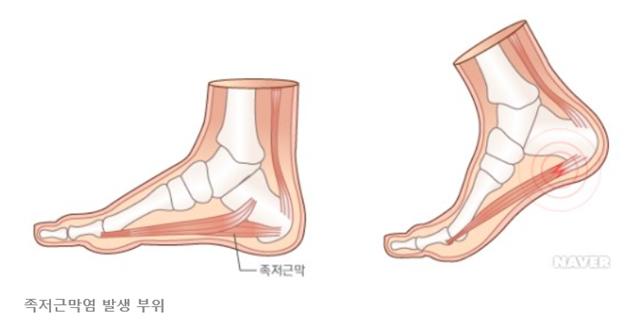
- Plantar fasciitis: Multiple randomized controlled trials and systematic reviews confirm ESWT as a first-line treatment for chronic plantar fasciitis, particularly when conservative treatment has failed.
- Calcific rotator cuff tendinopathy: ESWT is exceptionally effective for calcium deposits in the shoulder — clinical guidelines in Europe and North America consistently recommend it as the treatment of choice before surgical intervention.
- Achilles tendinopathy: Evidence supports ESWT — particularly radial shockwave — for both mid-portion and insertional Achilles tendinopathy, with success rates of 60–80% in chronic cases.
- Patellar tendinopathy: ESWT shows meaningful improvement in pain and function in athletes with chronic patellar tendinopathy (“jumper’s knee”).
- Lateral epicondylitis (tennis elbow): ESWT is supported by multiple trials as an effective non-surgical option when initial management has not resolved symptoms.
Crucially, shockwave therapy’s evidence base includes large randomized controlled trials — the gold standard in clinical research — with long follow-up periods showing durable results.
PRP — Promising but Inconsistent
PRP has attracted significant research interest, but the evidence remains more mixed:
- For lateral epicondylitis, some studies show PRP outperforming corticosteroid injections at longer follow-up — but results vary significantly between studies.
- For Achilles tendinopathy, PRP results have been disappointing in several high-quality trials, with some showing no significant benefit over placebo injections.
- For patellar tendinopathy, evidence is limited and inconsistent.
- For rotator cuff tendinopathy, PRP shows some promise but has not consistently outperformed other treatments in controlled trials.
The variability in PRP outcomes is partly explained by the lack of standardization — PRP preparation methods, platelet concentrations, and injection protocols differ significantly between studies and clinics, making direct comparison difficult.
Side-by-Side Comparison
| Factor | Shockwave Therapy (ESWT) | PRP Injection |
|---|---|---|
| Procedure type | Non-invasive (no needles) | Minimally invasive (injection) |
| Sessions required | 3–5 sessions | 1–3 injections |
| Evidence quality | Strong — multiple RCTs | Moderate — inconsistent results |
| Best evidence for | Plantar fasciitis, calcific tendinopathy, Achilles, tennis elbow | Lateral epicondylitis (some studies) |
| Pain during procedure | Mild to moderate discomfort | Mild (injection site) |
| Recovery after session | Immediate return to activity | 1–3 days soreness typical |
| Cost per session (Korea) | $100 – $300 | $300 – $800 |
| Calcific deposits | ✅ Directly breaks down calcium | ❌ No direct effect |
| Suitable for needle-averse patients | ✅ Yes | ❌ No |
When Shockwave Therapy Is the Clear First Choice
At MADI-BONE CLINIC, we recommend shockwave therapy as the primary non-surgical treatment for most tendon conditions, particularly when:
- Calcific tendinopathy is present — shockwave therapy directly fragments and disperses calcium deposits. No other non-surgical treatment achieves this.
- The condition is chronic (more than 3 months) — shockwave therapy is specifically designed to restart the healing process in tendons that have stopped responding to conventional treatment.
- The patient prefers a needle-free approach — shockwave requires no injections, no blood draw, and no downtime.
- Cost efficiency matters — a full course of shockwave therapy typically costs less than a single PRP injection at equivalent quality clinics.
- The evidence base matters — for plantar fasciitis, Achilles tendinopathy, and rotator cuff calcification, shockwave therapy has more consistent and higher-quality evidence than PRP.
When PRP Might Be Considered
PRP is not without value. There are specific situations where it may be appropriate:
- When shockwave therapy has been completed without sufficient improvement and additional biological stimulus is desired
- For lateral epicondylitis where PRP has the strongest comparative evidence versus corticosteroids
- As part of a combined approach alongside shockwave therapy for particularly resistant cases
- When a patient has a specific preference for a regenerative biological treatment and understands the variable evidence base
At MADI-BONE CLINIC, we do not recommend PRP as a first-line treatment for most tendon conditions based on the current evidence. When PRP is indicated, it is performed under ultrasound guidance to ensure accurate delivery to the target tissue.
Can Shockwave and PRP Be Combined?
Yes — and in some cases this combination makes clinical sense. Shockwave therapy can be used first to stimulate the local tissue environment and increase blood flow, followed by PRP to deliver concentrated growth factors to the now-activated tissue.
This sequential approach is occasionally used for particularly resistant cases of Achilles or patellar tendinopathy where single-modality treatment has been insufficient. However, for the majority of patients, shockwave therapy alone achieves excellent outcomes without the need for additional injections.
The Bottom Line
For most patients with chronic tendon pain, shockwave therapy offers the strongest combination of clinical evidence, safety, cost efficiency, and convenience. It requires no needles, no recovery time, and addresses the underlying pathology of tendinopathy — not just the symptoms.
PRP is a legitimate option in specific circumstances, but the evidence for most tendon conditions does not yet support it as a first-line choice over shockwave therapy.
If you’re dealing with persistent tendon pain and wondering which treatment is right for your specific condition, we’re happy to review your case and provide an honest assessment at MADI-BONE CLINIC in Seoul.
This article was written and reviewed by Dr. Choe Jeongheon, General Surgeon · Orthopedic Clinic Director · MD, PhD. Founder of MADI-BONE CLINIC, Seoul. This content is for informational purposes only and does not constitute medical advice. Always consult a qualified healthcare professional before beginning any treatment.